
Italien mit dem Camper: beste Regionen und Routen
Italien mit dem Camper: empfohlene Regionen, beste Reisezeit, Straßenzugang und praktische Hinweise für die Routenplanung.
Published 18. September 2026Last checked 18. September 2026
Währung
Euro
EUR. Karten müssen unabhängig vom Betrag akzeptiert werden
Sprache
Italienisch
Deutsch ist in Südtirol Mitoffiziell
Fahren
Rechts
Autobahn 130 km/h, 100 km/h über 3,5 t
Strom
230V, Typ F und L
Italien behält seinen eigenen dreipoligen Stecker
Leitungswasser
Trinkbar
Frag nach acqua del rubinetto
Notfall
112
Mehrsprachig. ACI-Pannenhilfe 803 116
Gebiete Italiens
Die Regionen Italiens: die Alpen, die Hügelstädte und der tiefe Süden
Italien misst 1.200 Kilometer vom Brennerpass bis zur Spitze Siziliens, und auf dieser Strecke ändern sich das Wetter, das Essen, der Preis für einen Kaffee und wie ernst jemand ein Parkschild nimmt. Wähl die Region nach dem Monat, in dem du reist, nicht umgekehrt.

Dolomiten und die Alpen
Die Dolomiten und die Alpen: eine dreimonatige Saison und die besten Straßen Italiens
Südtirol, Trentino, die Dolomiten Venetiens und die Westalpen von Aosta bis zur Lombardei. Deutsch ist in Südtirol Amtssprache und steht auf den Schildern an erster Stelle. Pässe wie Sella, Pordoi und Gavia sind nur im Sommer befahrbar, und mehrere schließen bei den ersten starken Schneefällen.
Am besten von Juni bis September
What it is like
- The most organised part of Italy. Signage, cycle paths and mountain huts all work the way you would expect in Austria.
- Bolzano in the valley reaches 30 °C in July while the passes above it are cold enough for a jacket. Pack for both.
Where to go
- The Great Dolomites Road, Bolzano to Cortina
- Alpe di Siusi and the Val Gardena
For the vehicle
- Winter equipment is required from 15 November to 15 April in South Tyrol and on the Brenner motorway, and from 15 October in the Aosta Valley.
- Pass roads are steep, narrow and full of cyclists and motorbikes. A long motorhome is hard work on the hairpins and some passes restrict length.

Italienische Seen
Die italienischen Seen: Gardasee, Comer See und Lago Maggiore, mit kaum Platz zum Wenden eines Wohnmobils
Garda, Como, Maggiore, Iseo und Orta, eine bis zwei Stunden nördlich von Mailand und das Erste, was die meisten Leute über die Alpen kommen. Garda ist das größte und am besten für Wohnmobile geeignete, Como das schönste und am schlechtesten zu befahrende.
Am besten von April bis Juni und von September bis Oktober
What it is like
- Garda's eastern shore has the campsites, the flat cycle path and the beaches. The western shore has the drama and the tunnels.
- Como's lakeside road is two lanes wide in theory and one in practice, with stone walls on both sides and buses coming the other way.
Where to go
- Sirmione and the southern Garda shore
- The Ponale road above Riva del Garda, on foot or by bike
For the vehicle
- Lake Como is the wrong lake for a long motorhome. Take the ferries across rather than driving round, and check the length limits when you book.
- Milan's Area B and Area C both run Monday to Friday 07:30 to 19:30. Area C is 7.50 euros a day. Area B is free but bars older engines.

Toskana und Umbrien
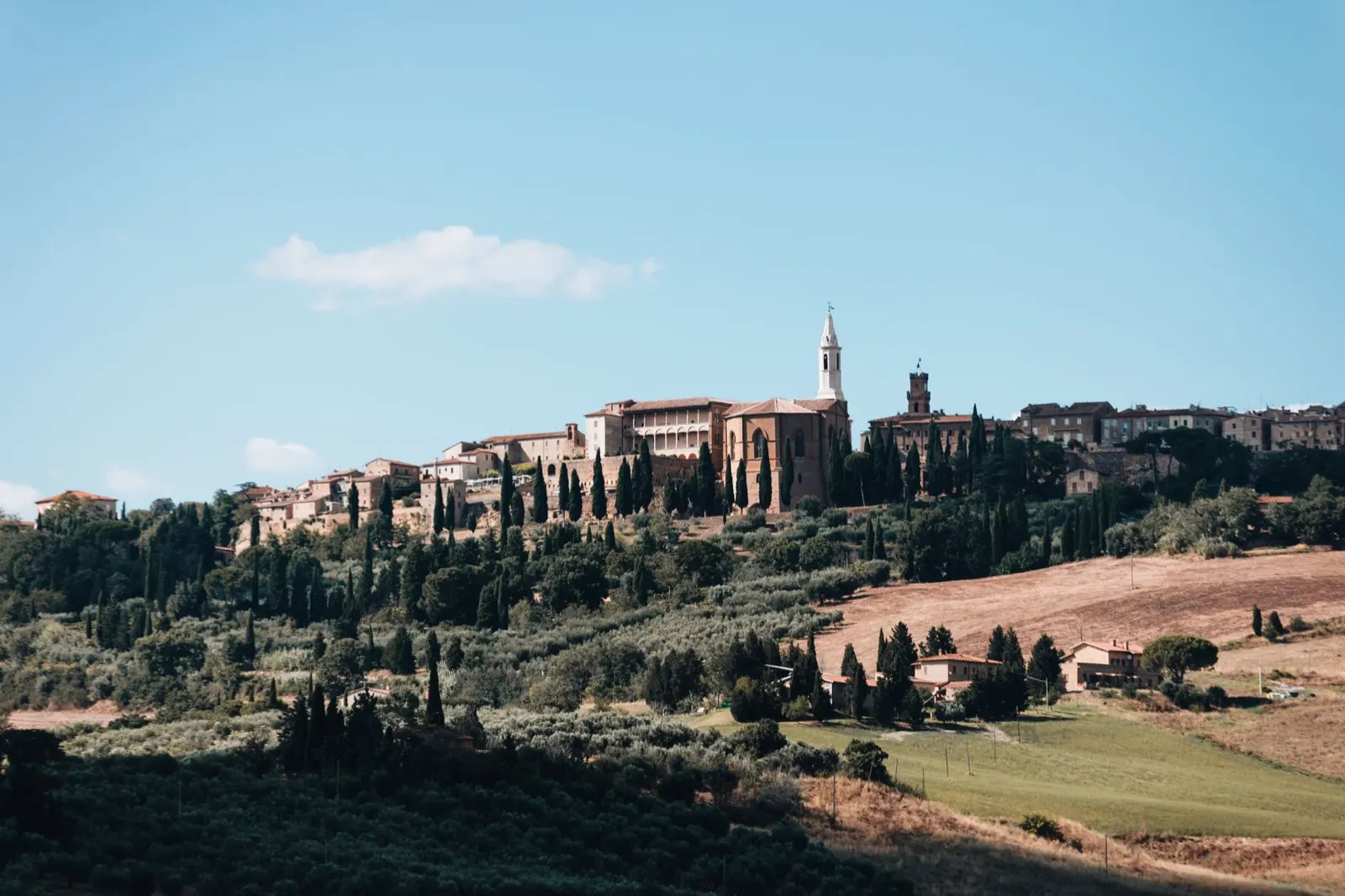
Toskana und Umbrien: Bergdörfer und in jedem eine ZTL
Das klassische Italien: Florenz, Siena, Pisa, Lucca, San Gimignano und die ruhigeren Entsprechungen Umbriens in Perugia, Assisi, Orvieto und Spoleto. Auch der Teil des Landes mit der dichtesten Konzentration an denkmalgeschützten historischen Zentren.
Am besten von April bis Juni und von September bis Oktober
What it is like
- Every town worth visiting is on a hill, walled, and closed to traffic. That is the whole appeal and the whole logistical problem.
- Siena averages 31 °C in July and August with almost no shade in the Val d'Orcia. Spring and autumn are better in every way.
Where to go
- Val d'Orcia, Pienza to Montalcino
- Siena, parked below the walls
For the vehicle
- Florence runs one of the strictest ZTLs in Italy, on a winter and a summer timetable with over forty camera gates. Park in a peripheral car park and take the bus.
- Most hill towns have a marked camper or coach car park below the walls, often with a service point. Use it rather than trying the centre.