
Bélgica en autocaravana: regiones y rutas
Bélgica en autocaravana: regiones recomendadas, mejor época, acceso por carretera y consejos prácticos para planificar la ruta.
Published 18 de septiembre de 2026Last checked 19 de septiembre de 2026
Moneda
Euro
EUR. Tarjetas en todas partes. Bancontact es el sistema local
Idioma
Holandés, Francés, Alemán
Holandés en Flandes, francés en Valonia, ambos en Bruselas
Conducción
Derecha
Autopista 120 km/h, 90 km/h para más de 3,5 toneladas
Energía
230V, tipo E
El enchufe tiene un pin de tierra. Comprueba tu cable de conexión.
Agua del grifo
Seguro para beber
Preguntar por kraantjeswater o eau du robinet
Emergencia
112
Policía 101. Médico de guardia 1733
Áreas de Bélgica
Las regiones de Bélgica: costa, ciudades de arte, capital, río y bosque
Un país que puedes cruzar en dos horas cambia por completo en el camino, desde una muralla de apartamentos en la playa hasta una meseta forestal vacía con nieve. Elige la región según el mes y según el conjunto de reglas por el que entras, porque en Bélgica esas son dos preguntas diferentes y ambas tienen respuestas reales.

La costa flamenca
La costa flamenca: una playa interminable, un tranvía y el aparcamiento más estricto de Bélgica
La costa belga es una única franja de arena que va desde De Panne, en la frontera francesa, hasta Knokke-Heist, en la holandesa, con un tranvía que recorre toda su longitud. Ostende, Blankenberge, Nieuwpoort y De Haan se encuentran a lo largo de ella, y las dunas reales sobreviven en los dos extremos, en Westhoek y en Zwin.
Mejor Mayo, Junio y Septiembre
What it is like
- August is the warmest month at Ostend, with a mean daily maximum of 22 °C, and also one of the wettest at 84 mm.
- Much of the seafront is a wall of apartment blocks. The dunes at De Panne and Knokke are what the rest of it used to look like.
Where to go
- The Westhoek dunes at De Panne, the biggest dune area in the country
- The Zwin nature park at Knokke, for birds and salt marsh
For the vehicle
- Coastal communes are the strictest in Belgium on overnight parking, and each writes its own police regulation. Read the one for the town you stop in.
- Seafront car parks almost all carry height barriers, and the ones that do not fill by 10:00 in summer.

Flandes y las ciudades artísticas
Flandes y las ciudades artísticas: Brujas, Gante, Amberes y Lovaina a menos de una hora de distancia
Planas, densas, de habla neerlandesa y con mucho ciclismo. Cuatro ciudades que serían un viaje por sí solas se encuentran a una hora de distancia: Brujas y sus canales, Gante y su castillo, Amberes y su puerto y diamantes, Lovaina y su universidad. Entre ellas hay tierras de cultivo, cerveza y los campos de batalla de Westhoek.
Mejor Mayo a Septiembre
What it is like
- July and August average a daily maximum of 24 °C at Antwerp, which is as warm as Belgium gets outside a heatwave.
- The cities are built to be walked and cycled. Bruges in particular is hostile to anything larger than a car, by design.
Where to go
- Bruges, best very early or after the day trippers leave
- Ghent, the one the Flemish rate above Bruges
For the vehicle
- Antwerp and Ghent both run low emission zones, and a foreign plate has to be registered first. One free registration covers both.
- Ghent says a motorhome may park on the road but not be slept in, and points you at the Blaarmeersen campsite or the Driebeek camper terrain at 12 euros a day.

Bruselas y Brabante
Bruselas y Brabante: la capital y la zona para la que debes registrarte
Diecinueve municipios que conforman una región urbana bilingüe, rodeada por el Brabante Flamenco al norte y el Brabante Valón al sur. En los alrededores: el Bosque de Soignes, un hayedo catalogado por la UNESCO que comienza en la terminal del tranvía, el campo de batalla de Waterloo y Lovaina con la universidad más antigua de los Países Bajos.
Mejor Mayo a Septiembre
What it is like
- Uccle, the reference station for the country, averages a daily maximum of 23 °C in July and August and 6 °C in January.
- The Sonian Forest is the reason Brussels feels less landlocked than it is. It is large and it starts inside the region.
Where to go
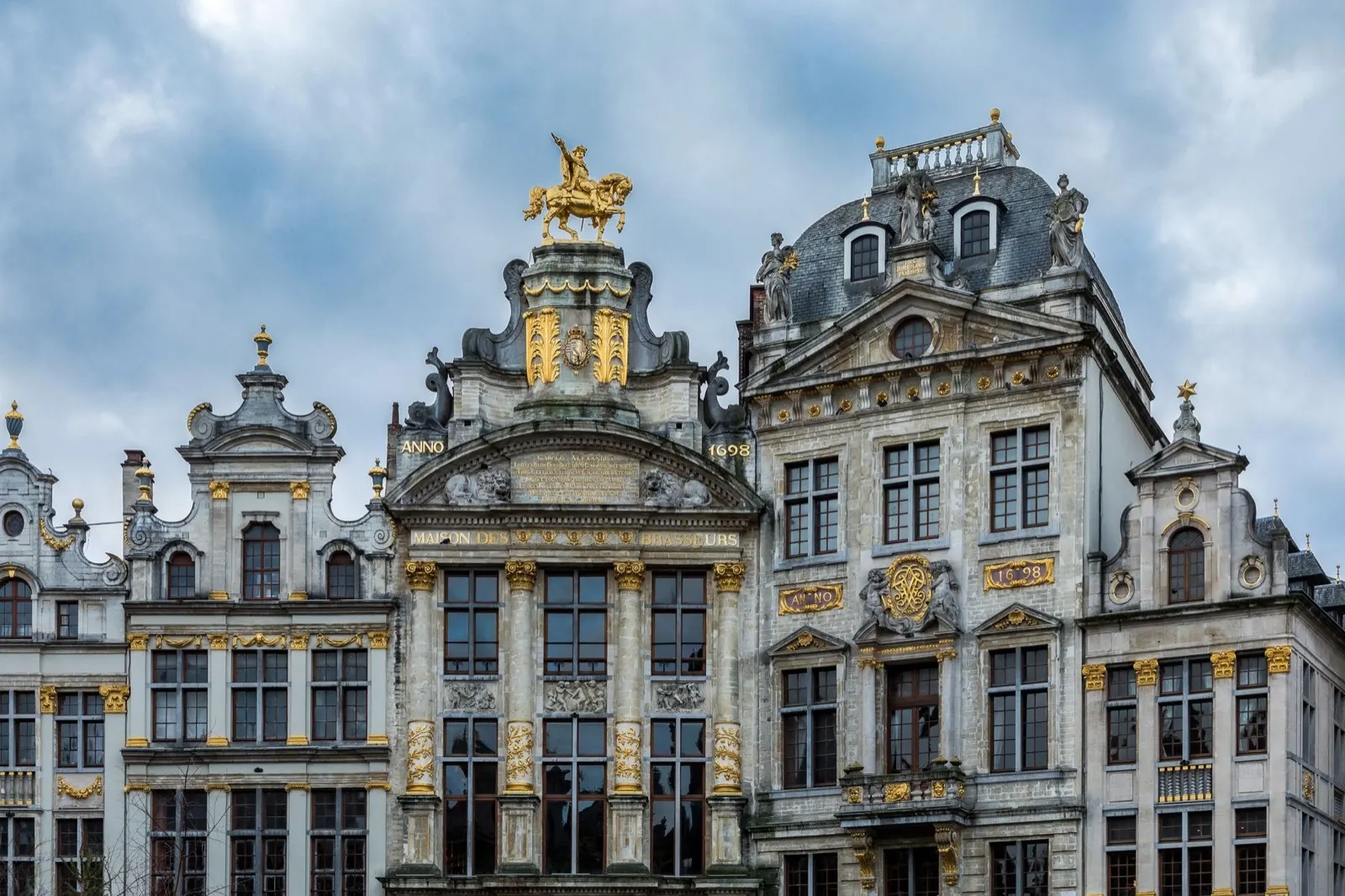
- The Grand Place, best at first light before the square fills
- The Sonian Forest, beech cathedral on the southern edge
For the vehicle
- The low emission zone covers all 19 communes, and a foreign plate must be registered, free, before you enter or within five days. Not doing it is 150 euros.
- Euro 5 diesel lost access on 1 January 2026. A day pass is 35 euros for a car or van, up to 24 a year.