
Alemania en autocaravana: regiones y rutas
Alemania en autocaravana: regiones recomendadas, mejor época, acceso por carretera y consejos prácticos para planificar la ruta.
Published 18 de septiembre de 2026Last checked 18 de septiembre de 2026
Moneda
Euro
EUR. Las tarjetas son habituales, pero aún hace falta efectivo
Idioma
Alemán
El inglés es muy hablado en las ciudades
Conducción
Derecha
La autopista no tiene límite de velocidad general
Energía
230V, tipo F
El estándar Schuko redondo de dos pines
Agua del grifo
Seguro para beber
Preguntar por Leitungswasser
Emergencia
112
Policía 110. Asistencia en carretera ADAC 089 20 20 40 00
Áreas de Alemania
Las regiones de Alemania: los Alpes, los ríos vinícolas y dos costas
Alemania tiene 900 kilómetros desde los Alpes hasta el Mar del Norte y el país cambia por completo en el camino: las montañas y los lagos en el sur, dos valles fluviales llenos de viñedos y castillos en el oeste, gargantas de arenisca y ciudades reconstruidas en el este, y dos costas planas, ventosas y extremadamente populares en la cima. Elige la región según el mes en que viajes.

Alpes bávaros
Los Alpes bávaros: el país más alto de Alemania y la temporada más corta
El borde sur de Baviera, desde el Allgäu pasando por Garmisch y el Zugspitze hasta Berchtesgaden y el Königssee, con Múnich a una hora al norte. Lagos, piedra caliza, teleféricos, castillos y la mejor infraestructura de montaña del país.
Mejor junio a septiembre
What it is like
- Garmisch-Partenkirchen averages 23 °C in July and 192 mm of rain in August. Afternoon thunderstorms are the pattern, not the exception.
- It is busy. This is where Germany goes on holiday, and where much of Austria's overflow goes too.
Where to go
- Berchtesgaden and the Königssee
- The Zugspitze, from Eibsee or Garmisch
For the vehicle
- Munich runs an environmental zone with a diesel ban: Euro 4 and older have been barred since February 2023, and the fine is 128.50 euros. The green sticker is required across the whole zone.
- Avoid Munich entirely from 19 September to 4 October 2026, the Oktoberfest dates. Every pitch, campsite and hotel within an hour is taken.

Selva Negra
La Selva Negra: carreteras altas, valles cálidos y la mejor conducción del suroeste
Un macizo de colinas boscosas que se extiende 160 kilómetros por la orilla este del Rin, desde Karlsruhe hasta la frontera suiza, con Friburgo a sus pies y Baden-Baden en su cabecera. Ciudades balneario, relojes de cuco, gargantas y una carretera de cresta construida para una conducción lenta.
Mejor de mayo a octubre
What it is like
- Freiburg is the warmest city in Germany, averaging 26 °C in July, while the ridge above it is 8 to 10 degrees cooler on the same afternoon.
- The valley floor is wine country and the hills are forest and dairy. You can do both in a morning.
Where to go
- The Schwarzwaldhochstraße, Baden-Baden to Freudenstadt
- The Wutach gorge, on foot
For the vehicle
- Stuttgart is the hardest city in Germany for an older diesel. Euro 4 diesels are barred city wide and Euro 5 inside the small zone, at 108.50 euros.
- Ridge roads are wide and well surfaced, valley roads are narrow and full of cyclists. Motorcycle traffic is heavy at weekends.

Mosela y Rin
El Mosela y el Rin Medio: castillos, viñedos y parcelas junto al río
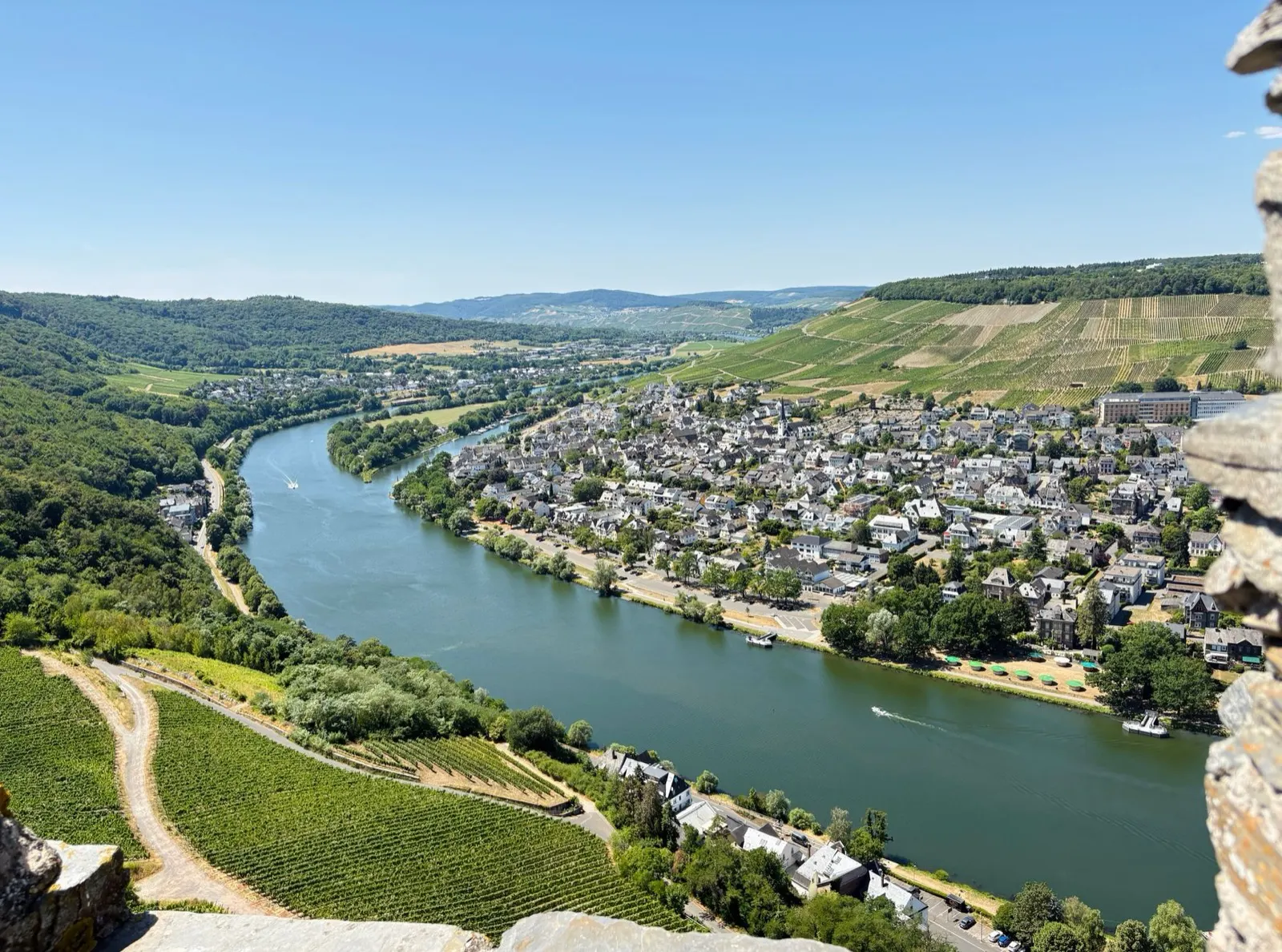
Dos valles fluviales que se encuentran en Coblenza: el Mosela, que desciende desde Tréveris pasando por Bernkastel y Cochem, y la garganta del Rin, que discurre hacia el norte desde Bingen pasando por la Lorelei, un tramo declarado Patrimonio de la Humanidad por la UNESCO con un castillo cada pocos kilómetros.
Mejor de abril a octubre
What it is like
- Trier averages 25 °C in July and is mild into October, which makes this the longest usable season in Germany.
- September and early October are the wine harvest, and every village runs a festival. It is the best month here and the busiest.
Where to go
- Bernkastel-Kues and the Moselle loop at Trittenheim
- Burg Eltz, from the car park and a walk
For the vehicle
- This is the best riverside Stellplatz country in Germany. Nearly every wine village on the Moselle has one on the bank, often for well under 15 euros with a service point.
- The valley roads are narrow, walled and busy with coaches in season. The vineyard tracks above them are not for a motorhome.