
Italia en autocaravana: regiones y rutas
Italia en autocaravana: regiones recomendadas, mejor época, acceso por carretera y consejos prácticos para planificar la ruta.
Published 18 de septiembre de 2026Last checked 18 de septiembre de 2026
Moneda
Euro
EUR. Deben aceptar tarjetas para cualquier importe
Idioma
Italiano
El alemán es cooficial en el Tirol del Sur
Conducción
Derecha
Autopista 130 km/h, 100 km/h para más de 3,5 t
Energía
230V, tipo F y L
Italia mantiene su propia clavija de tres clavijas
Agua del grifo
Seguro para beber
Preguntar por acqua del rubinetto
Emergencia
112
Cualquier idioma. Desglose ACI 803 116
Regiones de Italia
Las regiones de Italia: los Alpes, los pueblos de colinas y el profundo sur
Italia tiene 1.200 kilómetros desde el paso del Brennero hasta la punta de Sicilia, y recorrerla cambia el clima, la comida, el precio de un café y la seriedad con la que cualquiera se toma una señal de aparcamiento. Elige la región según el mes en que viajes, no al revés.

Dolomitas y los Alpes
Las Dolomitas y los Alpes: una temporada de tres meses y las mejores carreteras de Italia
Tirol del Sur, Trentino, las Dolomitas vénetas y los Alpes occidentales desde Aosta hasta Lombardía. El alemán es cooficial en Tirol del Sur y aparece primero en las señales. Puertos como Sella, Pordoi y Gavia son una propuesta solo de verano, y varios cierran con las primeras nevadas fuertes.
Mejor junio a septiembre
What it is like
- The most organised part of Italy. Signage, cycle paths and mountain huts all work the way you would expect in Austria.
- Bolzano in the valley reaches 30 °C in July while the passes above it are cold enough for a jacket. Pack for both.
Where to go
- The Great Dolomites Road, Bolzano to Cortina
- Alpe di Siusi and the Val Gardena
For the vehicle
- Winter equipment is required from 15 November to 15 April in South Tyrol and on the Brenner motorway, and from 15 October in the Aosta Valley.
- Pass roads are steep, narrow and full of cyclists and motorbikes. A long motorhome is hard work on the hairpins and some passes restrict length.

Lagos Italianos
Los lagos italianos: Garda, Como y Mayor, y ningún lugar para dar la vuelta a una furgoneta
Garda, Como, Maggiore, Iseo y Orta, a una o dos horas al norte de Milán y lo primero que la mayoría de la gente encuentra al cruzar los Alpes. Garda es el más grande y el más apto para autocaravanas, Como el más bonito y el peor para conducir.
Mejor abril a junio, septiembre a octubre
What it is like
- Garda's eastern shore has the campsites, the flat cycle path and the beaches. The western shore has the drama and the tunnels.
- Como's lakeside road is two lanes wide in theory and one in practice, with stone walls on both sides and buses coming the other way.
Where to go
- Sirmione and the southern Garda shore
- The Ponale road above Riva del Garda, on foot or by bike
For the vehicle
- Lake Como is the wrong lake for a long motorhome. Take the ferries across rather than driving round, and check the length limits when you book.
- Milan's Area B and Area C both run Monday to Friday 07:30 to 19:30. Area C is 7.50 euros a day. Area B is free but bars older engines.

Toscana y Umbría
Toscana y Umbría: pueblos de colina, y una ZTL en cada uno de ellos
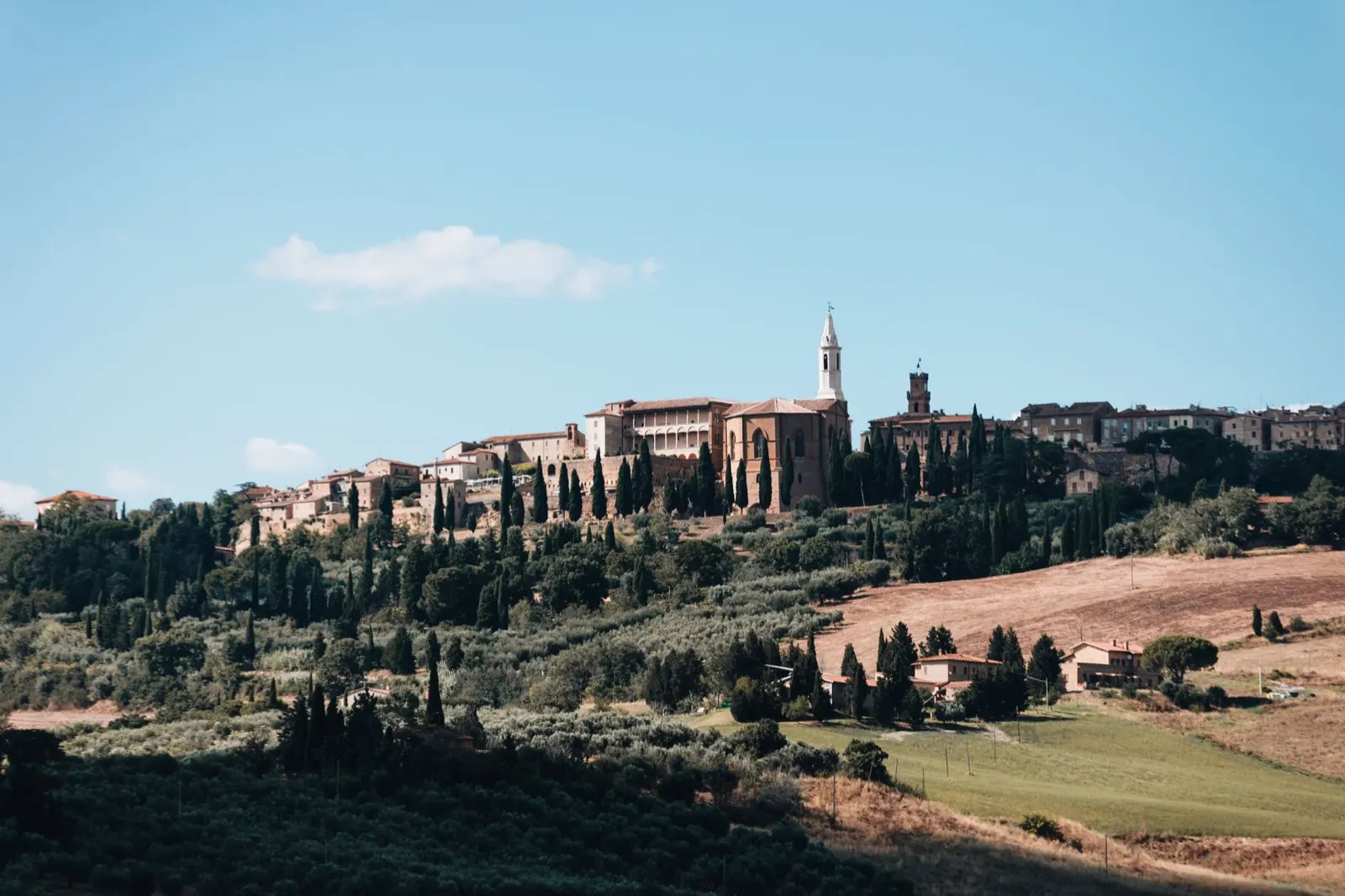
La Italia clásica: Florencia, Siena, Pisa, Lucca, San Gimignano y sus equivalentes más tranquilos en Umbría, Perugia, Asís, Orvieto y Spoleto. También la parte del país con la mayor concentración de centros históricos restringidos.
Mejor abril a junio, septiembre a octubre
What it is like
- Every town worth visiting is on a hill, walled, and closed to traffic. That is the whole appeal and the whole logistical problem.
- Siena averages 31 °C in July and August with almost no shade in the Val d'Orcia. Spring and autumn are better in every way.
Where to go
- Val d'Orcia, Pienza to Montalcino
- Siena, parked below the walls
For the vehicle
- Florence runs one of the strictest ZTLs in Italy, on a winter and a summer timetable with over forty camera gates. Park in a peripheral car park and take the bus.
- Most hill towns have a marked camper or coach car park below the walls, often with a service point. Use it rather than trying the centre.