
Eslovenia en autocaravana: regiones y rutas
Eslovenia en autocaravana: regiones recomendadas, mejor época, acceso por carretera y consejos prácticos para planificar la ruta.
Published 18 de septiembre de 2026Last checked 18 de septiembre de 2026
Moneda
Euro
EUR. En la zona euro desde 2007. Tarjetas casi en todas partes
Idioma
Esloveno
El italiano y el húngaro son cooficiales en algunas zonas fronterizas
Conducción
Derecha
Autopista 130 km/h, 80 km/h para más de 3.500 kg
Energía
230V, tipo F
Mismo enchufe de dos clavijas que la mayor parte de Europa
Agua del grifo
Seguro para beber
Preguntar por vodo iz pipe
Emergencia
112
Cualquier idioma. Policía 113, información de tráfico 1970
Áreas de Eslovenia
Las regiones de Eslovenia: los Alpes, el Karst y la costa, todo a dos horas
Eslovenia tiene 20.272 kilómetros cuadrados, y eso es lo más útil que se puede saber para planificar un viaje aquí. Desde Liubliana, los Alpes Julianos, el Adriático y la frontera húngara están a menos de dos horas, por lo que puedes elegir tu región según el clima de esa semana en lugar de según la ruta que planeaste en casa.

Alpes Julianos y Triglav
Los Alpes Julianos y el Triglav: el mejor paisaje y las normas más estrictas
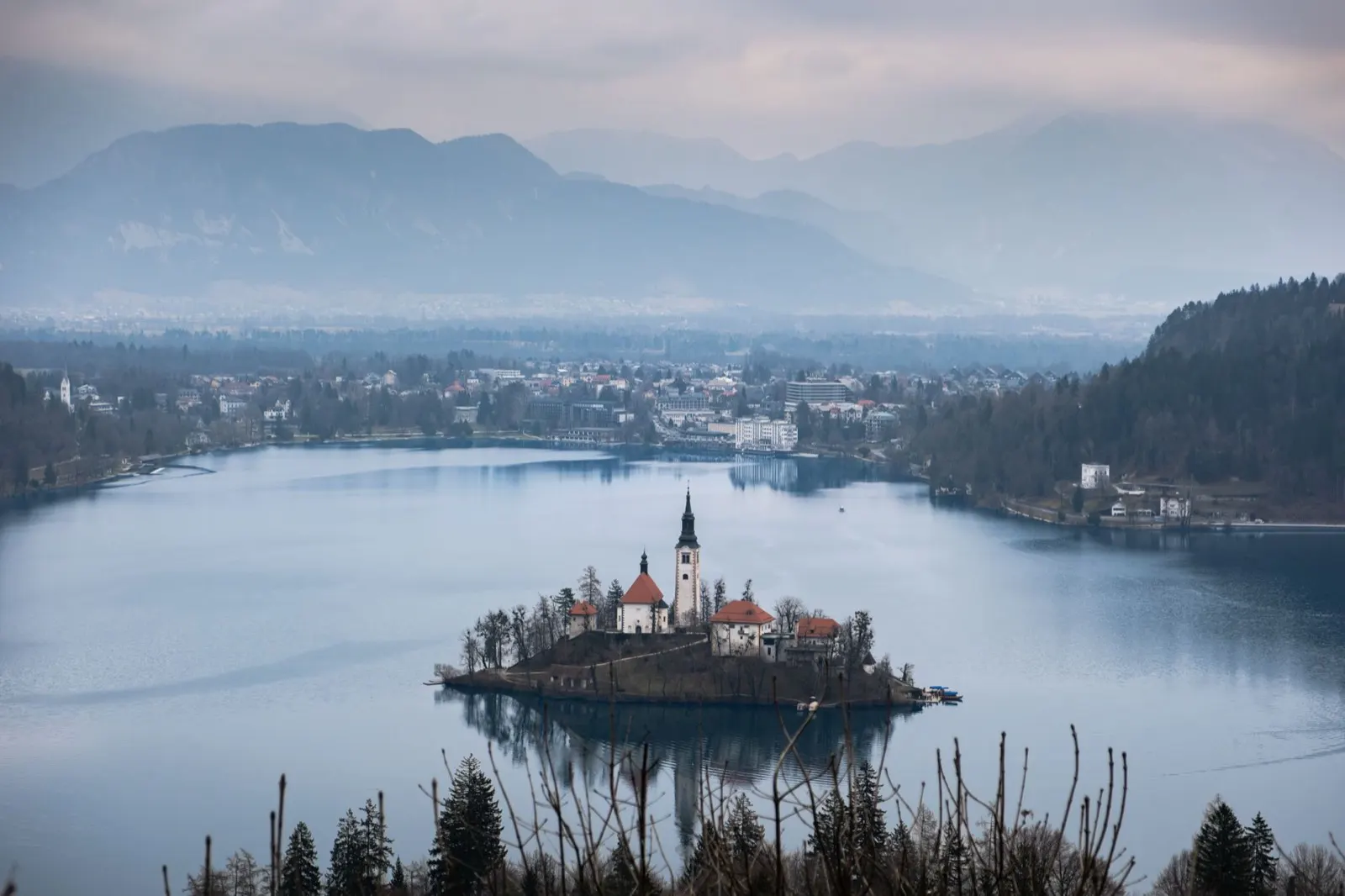
Bled, Bohinj, Kranjska Gora, el valle de Vrata y todo el Parque Nacional de Triglav, que abarca unos 880 kilómetros cuadrados y aproximadamente el cuatro por ciento del país. Por eso viene la mayoría de la gente, y es también la única parte de Eslovenia donde un estatuto nacional te dice dónde no puedes aparcar una autocaravana durante la noche.
Mejor de junio a septiembre
What it is like
- Rateče, on a valley floor at 864 metres, averages 24 °C in July and 2 °C in January. The passes above it are colder and hold snow for months longer.
- Bled and Bohinj are busy from June to September and calm either side. Bohinj is the wilder of the two and the better base.
Where to go
- Lake Bled and the Vintgar gorge
- Lake Bohinj and the Savica waterfall
For the vehicle
- Inside the park, parking a habitation vehicle outside a designated place carries 100 to 1,000 euros, and driving or parking off the road network carries 500 to 3,000.
- Bohinj's destination authority names two campsites, at Ukanc and Bohinjska Bistrica, and two motorhome parking areas, at Senožeta in Srednja vas and the Bohinjska Bistrica station.

El valle de Soča
El valle de Soča: agua turquesa, un museo de guerra y la mejor carretera del país
Bovec, Kobarid y Tolmin a lo largo del Soča, luego hasta Nova Gorica y los viñedos de Brda. El río tiene realmente el color que sugieren las fotografías, y el valle fue el frente del Isonzo en la Primera Guerra Mundial, por lo que hay un museo en Kobarid que vale la pena visitar una tarde.
Mejor de mayo a septiembre
What it is like
- Whitewater, gorges and via ferrata in the upper valley, wine and warmth in the lower one.
- Nova Gorica at the bottom of the valley averages 29 °C in July and 30 in August, and 199 mm of rain in November. The upper valley is cooler and wetter still.
Where to go
- Tolmin gorges and the Soča trail
- Kobarid and the Kozjak waterfall
For the vehicle
- Bovec is reported to cap parking a habitation vehicle at 12 hours outside a campsite or the town's own motorhome stopover, so plan the night rather than improvise it.
- The upper valley is one of the three summer pressure points in the country, along with Gorenjska and the coast. Campsites fill in August.

La costa y el Karst
La costa y el Karst: 46 kilómetros de Adriático y las cuevas detrás
Piran, Portorož, Izola, Koper y Ankaran a lo largo de los 46,6 kilómetros de costa eslovena, luego hacia el interior en la piedra caliza: Škocjan, Postojna, Lipica y el valle de Vipava. Arquitectura veneciana, coprincipado italiano y un invierno lo suficientemente suave como para viajar.
Mejor de abril a junio, septiembre y octubre
What it is like
- Portorož averages 29 °C in July and August and 9 °C in January, so the coast has no dead season, only a quiet one.
- Piran is a Venetian town on a peninsula, walkable in an hour and closed to through traffic. Izola and Koper are working towns with fewer visitors.
Where to go
- Piran and the Sečovlje salt pans
- Škocjan caves, a Unesco site and the better cave
For the vehicle
- The coast is the third of the country's summer pressure points. Campsites cluster around Lucija, Izola and Ankaran and fill in August.
- The burja wind is a real constraint for a high-sided vehicle. Warning signs on the Razdrto to Vipava road and the coastal motorway are not decorative.