
Italie en camping-car : régions et itinéraires
Italie en camping-car : régions conseillées, meilleure saison, accès routier et conseils pratiques pour préparer l’itinéraire.
Published 18 septembre 2026Last checked 18 septembre 2026
Devise
Euro
EUR. Les cartes doivent être acceptées, quel que soit le montant
Langue
Italien
L'allemand est co-officiel au Tyrol du Sud
Conduite
À droite
Autoroute 130 km/h, 100 km/h au-dessus de 3,5 t
Puissance
230V, type F et L
L'Italie conserve sa propre prise à trois broches
Eau du robinet
Potable
Demander acqua del rubinetto
Urgence
112
Toute langue. Répartition ACI 803 116
Régions d'Italie
Les régions d'Italie : les Alpes, les villes perchées et le grand Sud
L'Italie s'étend sur 1,200 kilomètres du col du Brenner à la pointe de la Sicile. En la traversant, le climat, la cuisine, le prix du café et le respect des panneaux de stationnement changent. Choisissez la région selon le mois du voyage, et non l'inverse.

Dolomites et les Alpes
Les Dolomites et les Alpes : une saison de trois mois et les plus belles routes d'Italie
Tyrol du Sud, Trentin, les Dolomites vénitiennes et les Alpes occidentales de la Vallée d'Aoste à la Lombardie. L'allemand est co-officiel au Tyrol du Sud et figure en premier sur les panneaux. Des cols tels que le Sella, le Pordoi et le Gavia ne sont praticables qu'en été, et plusieurs ferment dès les premières fortes neiges.
Idéal de juin à septembre
What it is like
- The most organised part of Italy. Signage, cycle paths and mountain huts all work the way you would expect in Austria.
- Bolzano in the valley reaches 30 °C in July while the passes above it are cold enough for a jacket. Pack for both.
Where to go
- The Great Dolomites Road, Bolzano to Cortina
- Alpe di Siusi and the Val Gardena
For the vehicle
- Winter equipment is required from 15 November to 15 April in South Tyrol and on the Brenner motorway, and from 15 October in the Aosta Valley.
- Pass roads are steep, narrow and full of cyclists and motorbikes. A long motorhome is hard work on the hairpins and some passes restrict length.

Lacs italiens
Les lacs italiens : Garde, Côme et Majeur, et nulle part où faire demi-tour avec une camionnette
Garda, Côme, Majeur, Iseo et Orta, à une heure ou deux au nord de Milan et la première chose que la plupart des gens rencontrent en franchissant les Alpes. Garda est le plus grand et le plus adapté aux camping-cars, Côme le plus beau et le plus difficile à parcourir.
Idéal d'avril à juin et de septembre à octobre
What it is like
- Garda's eastern shore has the campsites, the flat cycle path and the beaches. The western shore has the drama and the tunnels.
- Como's lakeside road is two lanes wide in theory and one in practice, with stone walls on both sides and buses coming the other way.
Where to go
- Sirmione and the southern Garda shore
- The Ponale road above Riva del Garda, on foot or by bike
For the vehicle
- Lake Como is the wrong lake for a long motorhome. Take the ferries across rather than driving round, and check the length limits when you book.
- Milan's Area B and Area C both run Monday to Friday 07:30 to 19:30. Area C is 7.50 euros a day. Area B is free but bars older engines.

Toscane et Ombrie
Toscane et Ombrie : villes perchées et une ZTL à chacune d'elles
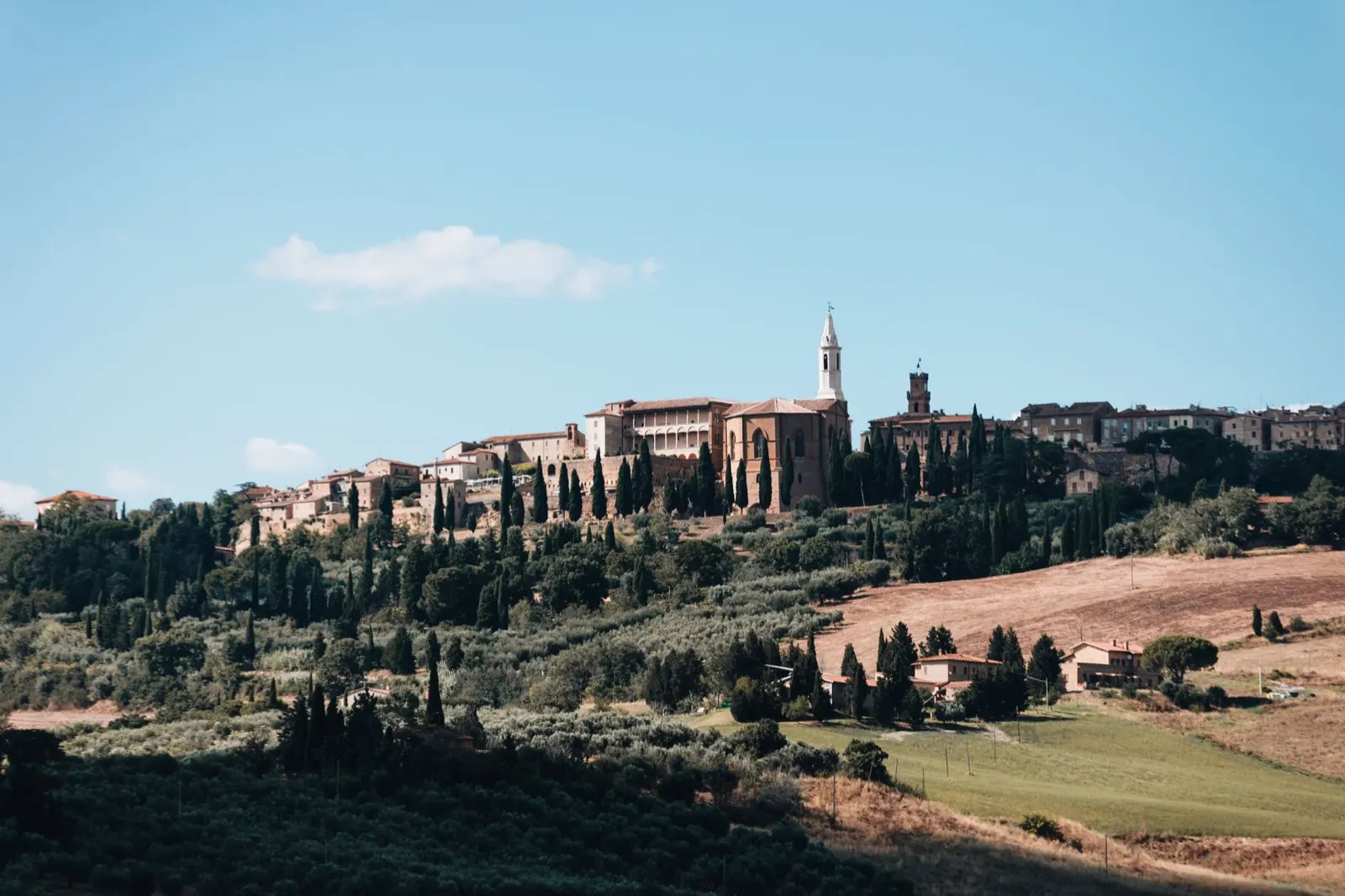
L'Italie classique : Florence, Sienne, Pise, Lucques, San Gimignano, et les équivalents plus calmes de l'Ombrie à Pérouse, Assise, Orvieto et Spolète. Également la partie du pays avec la plus forte concentration de centres historiques restreints.
Idéal d'avril à juin et de septembre à octobre
What it is like
- Every town worth visiting is on a hill, walled, and closed to traffic. That is the whole appeal and the whole logistical problem.
- Siena averages 31 °C in July and August with almost no shade in the Val d'Orcia. Spring and autumn are better in every way.
Where to go
- Val d'Orcia, Pienza to Montalcino
- Siena, parked below the walls
For the vehicle
- Florence runs one of the strictest ZTLs in Italy, on a winter and a summer timetable with over forty camera gates. Park in a peripheral car park and take the bus.
- Most hill towns have a marked camper or coach car park below the walls, often with a service point. Use it rather than trying the centre.