
Nemecko obytným autom: najlepšie regióny a trasy
Nemecko obytným autom: odporúčané regióny, najlepšie obdobie, prístupové cesty a praktické tipy na plánovanie trasy. Čo treba vedieť pred cestou.
Published 18. septembra 2026Last checked 18. septembra 2026
Mena
Euro
EUR. Karty sú bežné, hotovosť je stále potrebná
Jazyk
Nemčina
Angličtina je široko rozšírená v mestách
Jazda
Vpravo
Diaľnica nemá žiadne všeobecné obmedzenie rýchlosti
Napájanie
230V, typ F
Štandardná okrúhla dvojkolíková Schuko
Voda z vodovodu
Pitná
Opýtajte sa na Leitungswasser
Tiesňová linka
112
Polícia 110. ADAC porucha 089 20 20 40 00
Oblasti Nemecka
Regióny Nemecka: Alpy, vinárske rieky a dva pobrežia
Nemecko je 900 kilometrov od Álp k Severnému moru a krajina sa cestou úplne mení: hory a jazerá na juhu, dve údolia riek plné viníc a hradov na západe, pieskovcové rokliny a obnovené mestá na východe a dve ploché, veterné, extrémne populárne pobrežia na severe. Vyberte si región podľa mesiaca, kedy cestujete.

Bavorské Alpy
Bavorské Alpy: najvyššia krajina v Nemecku a najkratšia sezóna
Južný okraj Bavorska, od Allgäu cez Garmisch a Zugspitze až po Berchtesgaden a Königssee, s Mníchovom hodinu severne od neho. Jazerá, vápenec, lanovky, hrady a najlepšie organizovaná horská infraštruktúra v krajine.
Najlepšie od júna do septembra
What it is like
- Garmisch-Partenkirchen averages 23 °C in July and 192 mm of rain in August. Afternoon thunderstorms are the pattern, not the exception.
- It is busy. This is where Germany goes on holiday, and where much of Austria's overflow goes too.
Where to go
- Berchtesgaden and the Königssee
- The Zugspitze, from Eibsee or Garmisch
For the vehicle
- Munich runs an environmental zone with a diesel ban: Euro 4 and older have been barred since February 2023, and the fine is 128.50 euros. The green sticker is required across the whole zone.
- Avoid Munich entirely from 19 September to 4 October 2026, the Oktoberfest dates. Every pitch, campsite and hotel within an hour is taken.

Čierny les
Čierny les: vysoké cesty, teplé údolia a najlepšie jazdenie na juhozápade
Pásmo zalesnených kopcov tiahnuce sa 160 kilometrov po východnom brehu Rýna, od Karlsruhe po švajčiarske hranice, s Freiburgom na úpätí a Baden-Baden na začiatku. Kúpeľné mestá, kukučkové hodiny, rokliny a hrebeňová cesta postavená pre pomalú jazdu.
Najlepšie od mája do októbra
What it is like
- Freiburg is the warmest city in Germany, averaging 26 °C in July, while the ridge above it is 8 to 10 degrees cooler on the same afternoon.
- The valley floor is wine country and the hills are forest and dairy. You can do both in a morning.
Where to go
- The Schwarzwaldhochstraße, Baden-Baden to Freudenstadt
- The Wutach gorge, on foot
For the vehicle
- Stuttgart is the hardest city in Germany for an older diesel. Euro 4 diesels are barred city wide and Euro 5 inside the small zone, at 108.50 euros.
- Ridge roads are wide and well surfaced, valley roads are narrow and full of cyclists. Motorcycle traffic is heavy at weekends.

Mosela a Rýn
Mosela a stredný Rýn: hrady, vinice a státia pri rieke
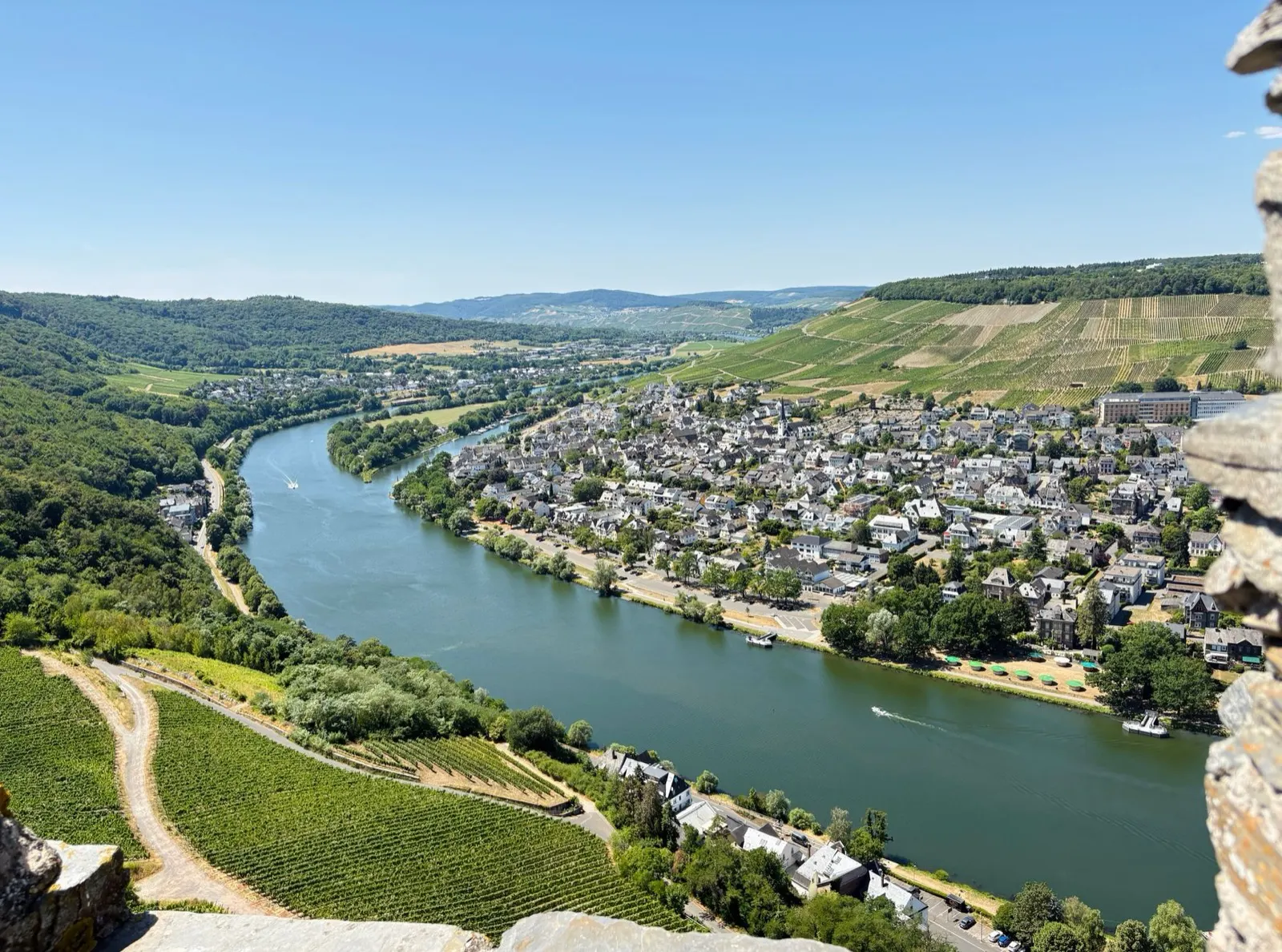
Dve riečne údolia, ktoré sa stretávajú v Koblenzi: Mosela vinúca sa z Trieru cez Bernkastel a Cochem a tiesňava Rýna smerujúca na sever z Bingenu okolo Lorelei, úsek zapísaný na zozname svetového dedičstva UNESCO s hradom na každom kilometri.
Najlepšie od apríla do októbra
What it is like
- Trier averages 25 °C in July and is mild into October, which makes this the longest usable season in Germany.
- September and early October are the wine harvest, and every village runs a festival. It is the best month here and the busiest.
Where to go
- Bernkastel-Kues and the Moselle loop at Trittenheim
- Burg Eltz, from the car park and a walk
For the vehicle
- This is the best riverside Stellplatz country in Germany. Nearly every wine village on the Moselle has one on the bank, often for well under 15 euros with a service point.
- The valley roads are narrow, walled and busy with coaches in season. The vineyard tracks above them are not for a motorhome.