
Germania in camper: regioni e itinerari
Germania in camper: regioni consigliate, stagione migliore, accesso stradale e suggerimenti pratici per pianificare l’itinerario.
Published 18 settembre 2026Last checked 18 settembre 2026
Valuta
Euro
EUR. Le carte sono comuni, ma servono ancora contanti
Lingua
Tedesco
L'inglese è ampiamente parlato nelle città
Guida
Destra
L'Autobahn non ha un limite di velocità generale
Elettricità
230V, tipo F
La spina Schuko rotonda standard a due poli
Acqua del rubinetto
Sicuro da bere
Richiedi Leitungswasser
Emergenza
112
Polizia 110. Soccorso stradale ADAC 089 20 20 40 00
Zone della Germania
Le regioni della Germania: le Alpi, i fiumi del vino e due coste
La Germania si estende per 900 chilometri dalle Alpi al Mare del Nord e il paese cambia completamente lungo il percorso: le montagne e i laghi a sud, due valli fluviali ricche di vigneti e castelli a ovest, gole di arenaria e città ricostruite a est, e due coste piatte, ventose ed estremamente popolari in cima. Scegli la regione in base al mese del tuo viaggio.

Alpi Bavaresi
Le Alpi Bavaresi: il paese più alto della Germania e la stagione più breve
Il confine meridionale della Baviera, dall'Algovia attraverso Garmisch e lo Zugspitze fino a Berchtesgaden e al Königssee, con Monaco a un'ora a nord. Laghi, calcare, funivie, castelli e l'infrastruttura di montagna meglio organizzata del paese.
Ideale da giugno a settembre
What it is like
- Garmisch-Partenkirchen averages 23 °C in July and 192 mm of rain in August. Afternoon thunderstorms are the pattern, not the exception.
- It is busy. This is where Germany goes on holiday, and where much of Austria's overflow goes too.
Where to go
- Berchtesgaden and the Königssee
- The Zugspitze, from Eibsee or Garmisch
For the vehicle
- Munich runs an environmental zone with a diesel ban: Euro 4 and older have been barred since February 2023, and the fine is 128.50 euros. The green sticker is required across the whole zone.
- Avoid Munich entirely from 19 September to 4 October 2026, the Oktoberfest dates. Every pitch, campsite and hotel within an hour is taken.

Foresta Nera
La Foresta Nera: strade panoramiche, valli calde e la migliore guida nel sud-ovest
Un blocco di colline boscose che si estende per 160 chilometri lungo la riva orientale del Reno, da Karlsruhe al confine svizzero, con Friburgo ai suoi piedi e Baden-Baden alla sua testa. Città termali, orologi a cucù, gole e una strada panoramica costruita per una guida lenta.
Ideale da maggio a ottobre
What it is like
- Freiburg is the warmest city in Germany, averaging 26 °C in July, while the ridge above it is 8 to 10 degrees cooler on the same afternoon.
- The valley floor is wine country and the hills are forest and dairy. You can do both in a morning.
Where to go
- The Schwarzwaldhochstraße, Baden-Baden to Freudenstadt
- The Wutach gorge, on foot
For the vehicle
- Stuttgart is the hardest city in Germany for an older diesel. Euro 4 diesels are barred city wide and Euro 5 inside the small zone, at 108.50 euros.
- Ridge roads are wide and well surfaced, valley roads are narrow and full of cyclists. Motorcycle traffic is heavy at weekends.

Mosella e Reno
La Mosella e il Medio Reno: castelli, vigneti e piazzole lungo il fiume
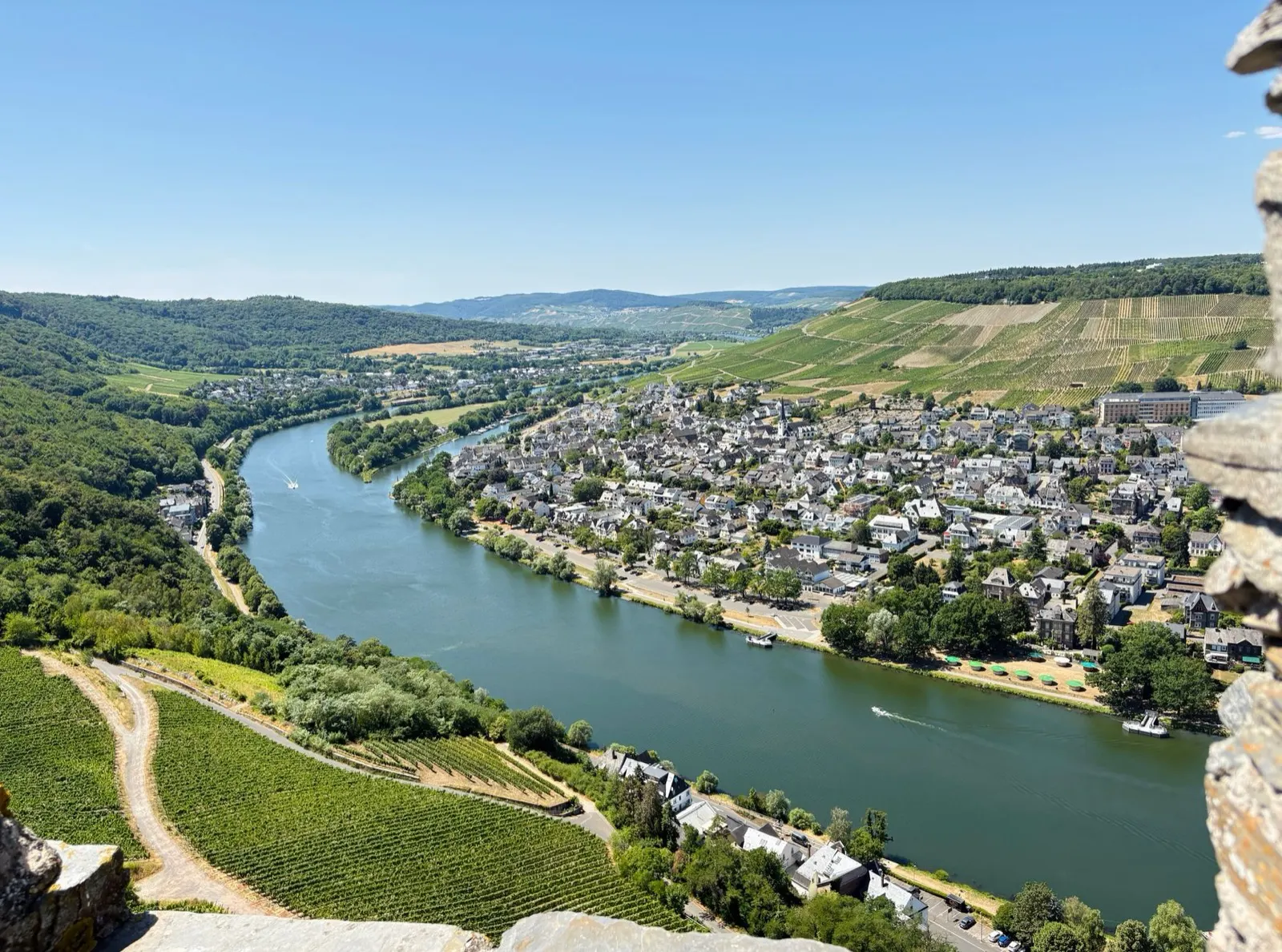
Due valli fluviali che si incontrano a Coblenza: la Mosella che scende da Treviri passando per Bernkastel e Cochem, e la gola del Reno che scorre a nord da Bingen oltre la Loreley, un tratto patrimonio dell'UNESCO con un castello ogni pochi chilometri.
Ideale da aprile a ottobre
What it is like
- Trier averages 25 °C in July and is mild into October, which makes this the longest usable season in Germany.
- September and early October are the wine harvest, and every village runs a festival. It is the best month here and the busiest.
Where to go
- Bernkastel-Kues and the Moselle loop at Trittenheim
- Burg Eltz, from the car park and a walk
For the vehicle
- This is the best riverside Stellplatz country in Germany. Nearly every wine village on the Moselle has one on the bank, often for well under 15 euros with a service point.
- The valley roads are narrow, walled and busy with coaches in season. The vineyard tracks above them are not for a motorhome.