
Croatia by campervan: best regions and routes
Where to go by campervan in Croatia: recommended regions, the best season, road access and practical route advice. What to know before you go.
Published 18 September 2026Last checked 18 September 2026
Currency
Euro
EUR. Since 1 January 2023. The kuna is gone
Language
Croatian
German and Italian widely spoken on the coast
Driving
Right
Motorway 130 km/h, 90 km/h over 3.5 t
Power
230V, type F
Same two-pin plug as most of Europe
Tap water
Safe to drink
Ask for voda iz slavine
Emergency
112
Any language. Road help from HAK on 1987
Areas of Croatia
The regions of Croatia: Istria, the islands and the interior
Croatia is a thin country wrapped around a mountain range, so a two hour drive changes the weather, the food and the price of a pitch. Pick the stretch of coast by the month, and give the interior more time than the map suggests it deserves.

Istria
Istria: the Italian end of Croatia, and the most organised for camping
The heart-shaped peninsula in the north west, closest to Italy and Austria and the first Croatian coast most people reach. Italian is co-official in several towns, the hill villages are Tuscan in everything but name, and the density of registered campsites is the highest in the country.
Best May, June, September
What it is like
- Truffles, olive oil and Malvazija rather than grilled fish and pršut. The inland food is the reason to come.
- Cooler and greener than Dalmatia, with a real autumn. Rovinj averages 29 °C in August against Split's 31.
Where to go
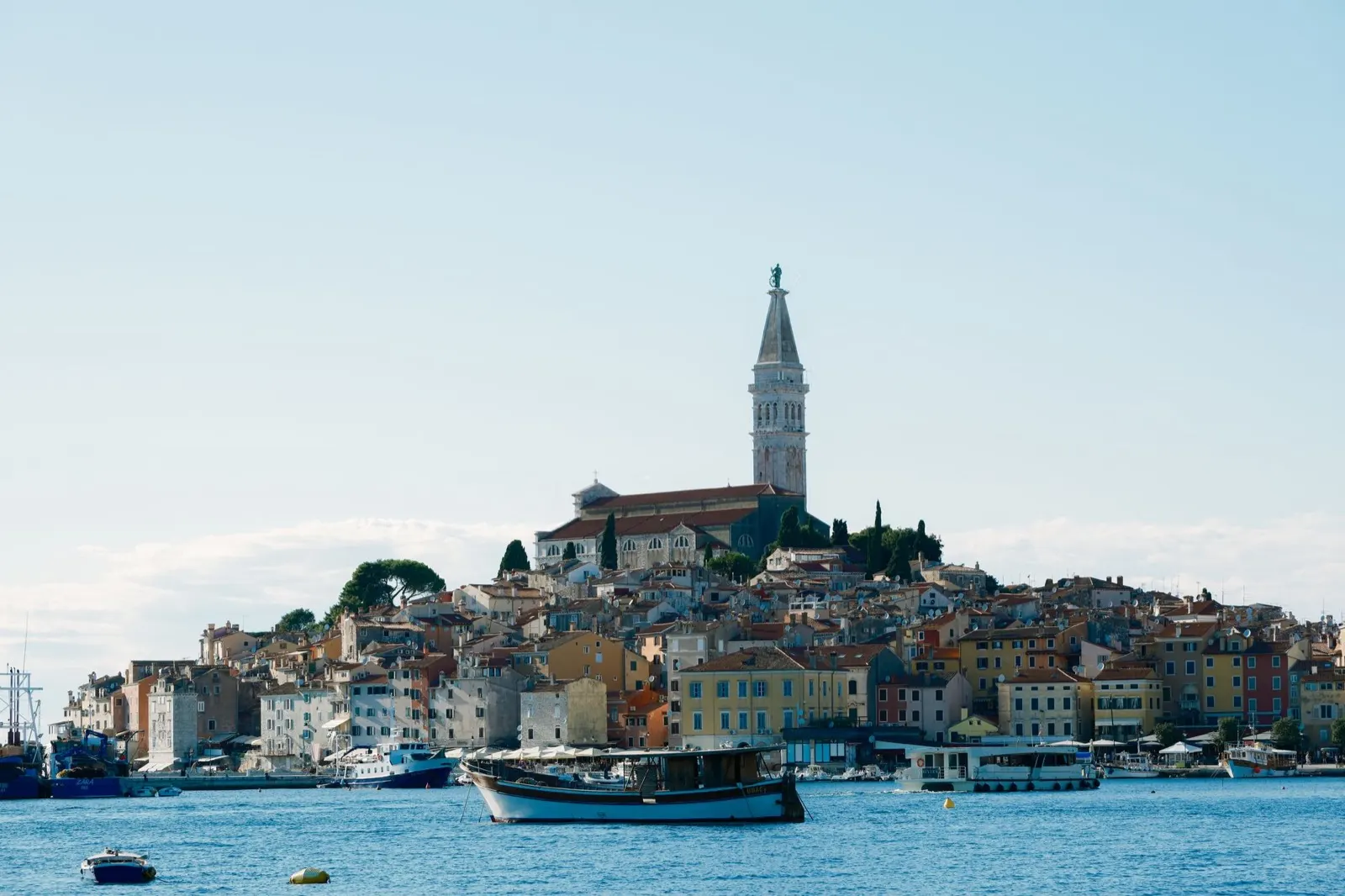
- Rovinj, the prettiest old town on the coast
- Motovun and Grožnjan in the hills
For the vehicle
- The A8 and A9 are run by Bina Istra, not HAC, and the Učka tunnel is charged separately at around 4.50 euros for a car.
- Wardens here are the most active in Croatia. Poreč, Umag and Medulin all run coordinated patrols against camping on the coastal margins.

Kvarner and Krk
Kvarner and Krk: the gulf where the mountains meet the islands
The gulf between Istria and the Velebit, with Rijeka at its head and the islands of Krk, Cres, Lošinj, Rab and Pag strung down it. Krk is joined to the mainland by a bridge, so it is the easiest island in Croatia to reach with a van. This is also where the bura is strongest.
Best May, June, September
What it is like
- The wettest part of the coast in autumn: Rijeka averages over 200 mm in each of October and November.
- The Velebit side is bare limestone and looks lunar. The island interiors are green and full of sheep.
Where to go
- The Krk bridge and the island's quiet north
- Cres and Lošinj, one road end to end
For the vehicle
- The Krk bridge closes in a bura, and caravans and high-sided vehicles are banned before anything else. Check HAK before you commit to it.
- Cres, Lošinj and Rab need ferries. Krk and Pag do not.

Northern Dalmatia
Northern Dalmatia: Zadar, Šibenik and the empty archipelago
From Pag down through Zadar and Šibenik to the Krka river. The coast here has more islands and fewer crowds than the Split stretch, two national parks within an hour of each other, and a July that averages just 30 mm of rain in Zadar.
Best May, June, September, October
What it is like
- Zadar is the most liveable coastal city in Croatia and a fraction of Split's price.
- The Kornati are 89 mostly bare islands and are best seen from a boat rather than a road.
Where to go
- Krka national park and the Skradinski buk falls
- Zadar's sea organ at sunset
For the vehicle
- The A1 between Sveti Rok and Posedarje is the section that closes most in a bura, with a long detour through Gračac and Obrovac when it does.
- Camping is banned outright inside Krka, Paklenica, Telašćica and the Kornati, under each park's own ordinance.