
Czechia by campervan: best regions and routes
Where to go by campervan in Czechia: recommended regions, the best season, road access and practical route advice. What to know before you go.
Published 18 September 2026Last checked 19 September 2026
Currency
Czech koruna
CZK, not the euro. 24.34 Kč to €1 on 18 September 2026
Language
Czech
English in the cities, German near the borders
Driving
Right
Motorway 130 km/h, 80 km/h over 3.5 tonnes
Power
230V, type E
Takes the same round two-pin plug as most of Europe
Tap water
Safe to drink
Ask for kohoutkovou
Emergency
112
Ambulance 155, police 158, fire 150
Areas of Czechia
The regions of Czechia: Bohemia, Moravia and Silesia
Czechia is small enough to cross in a day and varied enough that it is worth not doing that. Bohemia in the west is sandstone, forest and ponds, Moravia in the east is warmer, flatter and where the wine is, and Silesia in the north east is mountains and heavy industry side by side. Pick by the month and by how high you want to be.

Bohemian Switzerland
Bohemian Switzerland: sandstone towers on Czechia's German border
České Švýcarsko is a national park an hour north of Prague where the Elbe cuts a gorge through eroded sandstone. Towers, arches, deep ravines and forest that runs straight across the border into Germany's Sächsische Schweiz. It is the newest of Czechia's four national parks, declared from the start of 2000, and the most dramatic to look at.
Best May to September
What it is like
- Walking country rather than driving country. The good bits are 20 minutes to two hours from a car park.
- The 2022 wildfire changed parts of the forest, and some routes have been rebuilt since.
Where to go
- Pravčická brána, the largest sandstone arch in Europe
- The Kamenice gorge boat trips at Hřensko
For the vehicle
- It is a national park. Camping and fires outside designated places are banned, and so is standing off the road network.
- Hřensko is narrow, steep and crowded. Park in the marked car parks and walk, rather than taking a long van through it.

The Šumava
The Šumava: the biggest forest in Czechia and its emptiest corner
A long forested range along the Bavarian and Austrian border, national park and protected landscape area together, with glacial lakes, peat bogs and the highest rainfall in the country. It was the iron curtain for forty years, which is exactly why so little was built here and why it is now the quietest place in Czechia.
Best June to September
What it is like
- Cool and wet. Churáňov at 1,118 metres averages 19 °C in July and gets close to 1,090 mm of rain a year.
- Long distance walking and cycling, not summits. The ridges are rounded and forested rather than alpine.
Where to go
- Černé and Čertovo jezero, the glacial lakes
- Modrava and the Vltava headwaters
For the vehicle
- National park rules apply in the core and CHKO rules around it, so camping and fires are banned outside designated places across nearly the whole range.
- The park's seven nouzová nocoviště are walk-in tent sites for hikers, not places to take a van.

South Bohemia and Český Krumlov
South Bohemia and Český Krumlov: ponds, castles and the gentlest driving in Czechia
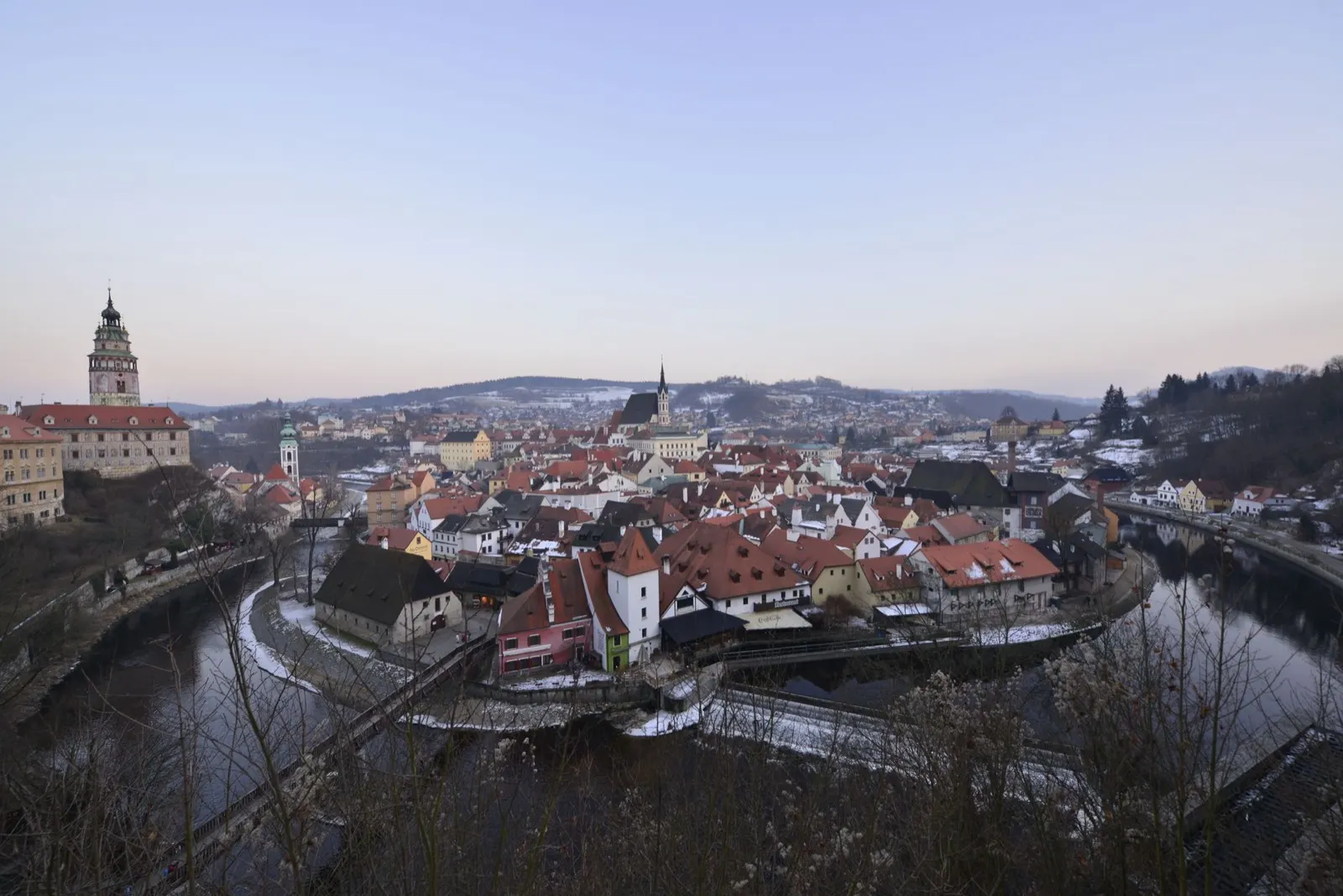
Gentle, green and full of water. The medieval fishponds around Třeboň are still farmed for carp, the squares in Tábor and České Budějovice are among the best in the country, and Český Krumlov wraps a whole UNESCO listed old town inside a loop of the Vltava. It is the easiest part of Czechia to drive and the best introduction to it.
Best May to September
What it is like
- Flat to rolling, with fishponds, avenues of trees and painted farmhouse gables.
- Wetter and a little cooler than Prague, which is why everything is so green.
Where to go
- Český Krumlov, arriving early or staying late
- Třeboň and the fishpond landscape
For the vehicle
- Český Krumlov restricts vehicle access to the old town. Use the car parks on the edge and walk in, which takes ten minutes.
- The Třeboňsko protected landscape area covers most of the pond country, so camping and fires off designated places are banned there.