
Netherlands by campervan: sleeping and camping
Where you may legally sleep in a campervan in Netherlands: parking, camping, campsites, stopovers and possible fines. What to know before you go.
Published 18 September 2026Last checked 19 September 2026
Currency
Euro
EUR. Cards almost everywhere, a little cash for markets
Language
Dutch
English is spoken almost everywhere. Frisian in Friesland
Driving
Right
Motorway 100 km/h from 06:00 to 19:00
Power
230V, type F
Same two-pin plug as most of Europe
Tap water
Safe to drink
Ask for kraanwater
Emergency
112
Non-urgent police 0900-8844
Sleeping
Sleeping
There is no national answer, and that is the answer. The Wet op de openluchtrecreatie was repealed on 1 January 2008, and since then nothing at national level says whether you may sleep in a vehicle. Each municipality writes its own rule in its Algemene plaatselijke verordening, the APV, and the rules contradict each other from one town boundary to the next.

There is no single national figure for what this costs, and any guide quoting one is guessing. The offence is a municipal one under the town's own APV, and it can be enforced either as an administrative fine or through the prosecutor, so the amount is set per municipality and per route rather than by one national table. In practice the first move is usually an instruction to leave. The cost you can plan for is the parking charge, which is published, and the risk you cannot price is being woken at two in the morning. If you want the number for a specific town, its APV and its fine list are both published on the municipality's own site.
Where the answer is yes
- A marked camperplaats, municipal or private, paid at the machine or to a warden
- A kampeerterrein, a campsite designated as one in the omgevingsplan
- A place the council has formally designated, which switches the camping ban off
- A private garden or yard with the owner's permission, in most municipalities, for your own use
Where it is an offence
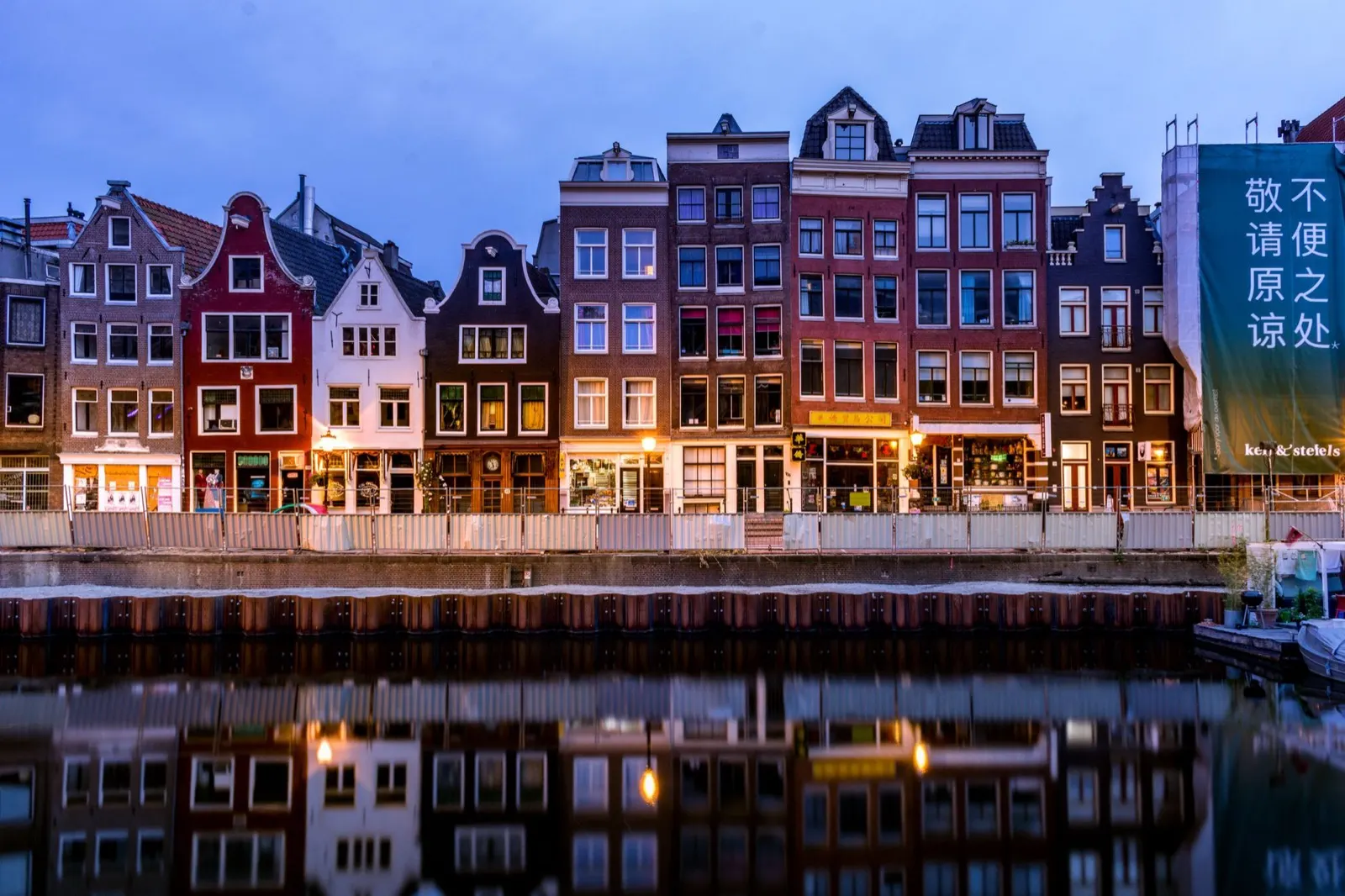
- Anywhere on or by the road in Amsterdam, Rotterdam or Maastricht, asleep in the vehicle
- Anywhere in Schouwen-Duiveland between sunset and sunrise
- On or by the road in Bergen in North Holland between 22:00 and 07:00
- Outside a campsite in any of the towns carrying the model camping ban, which is most of the coast and all five Wadden islands
- Parked on the road for more than three consecutive days, in the many towns with the model parking limit
What the ordinance says, town by town
| Municipality | Where the rule sits | What it forbids |
|---|---|---|
| Amsterdam | The city's APV | Using the road as a sleeping place, or using a vehicle on or by the road as one. A separate provision caps a camper on the road at three consecutive days |
| Rotterdam | The city's APV | Sleeping on the road, expressly including inside a motor vehicle. Lifted only at places designated as a kampeerplaats |
| Den Haag | The city's APV | Lying or sleeping on or by the road between sunset and sunrise, with the use of a car named as shelter |
| Maastricht | The city's APV | Sleeping on a public place, in or out of a motor vehicle. A separate provision bans recreational night stay outside a campsite |
| Schouwen-Duiveland | The municipal APV | Using a public place or a vehicle on one as a sleeping place between sunset and sunrise, across the whole municipality |
How a camperplaats works
- Municipal ones cost 10.50 to 25.59 euros a night on the 2026 ordinances checked for this page, usually with water in, grey water out and a toilet point.
- Stay limits are short and they are in the ordinance. Coevorden allows three consecutive nights, Weststellingwerf three nights per calendar month, Laren exactly one.
How to read a place before you stop
- The question is never whether it is legal in the Netherlands. It is what this municipality's APV says, and the APV of every Dutch municipality is published free at lokaleregelgeving.overheid.nl.
- Read both the camping section and the parking section, because a town can restrict you through either. Many towns also carry a separate rule about using a public place as a sleeping place, which sits elsewhere in the same document.
Two of the five Wadden islands are closed to motor vehicles altogether. Vlieland is car-free unless you hold an exemption, and its council said in September 2026 that driving without one is among the most common offences on the island. Schiermonnikoog has been closed to motor vehicles since 1992 and only grants an exemption where a vehicle is indispensable. On both, the van stays on the mainland.