
Sweden by campervan: best regions and routes
Where to go by campervan in Sweden: recommended regions, the best season, road access and practical route advice. What to know before you go.
Published 18 September 2026Last checked 19 September 2026
Currency
Swedish krona
SEK, not the euro. 11.29 kr to €1 on 18 September 2026
Language
Swedish
English is spoken almost everywhere
Driving
Right
70 km/h outside towns unless signed, 110 on motorway
Power
230V, type F
Same two-pin plug as most of the continent
Tap water
Safe to drink
Ask for kranvatten
Emergency
112
Health advice 1177, non-urgent police 114 14
Areas of Sweden
The regions of Sweden: coasts, lakes, forest and the far north
Sweden is 1,600 km from end to end and the difference between its ends is a season rather than a style. The south is a short hop from Denmark and Germany and has the mildest weather. The middle is forest, lakes and long quiet roads. The north is a commitment measured in days of driving, and the ground rules about where you may stand are the same everywhere. Pick the region by the month you are travelling and by how far you are willing to go.

Bohuslän and the west coast
Bohuslän and the west coast: bare granite, fishing villages and Sweden's own summer
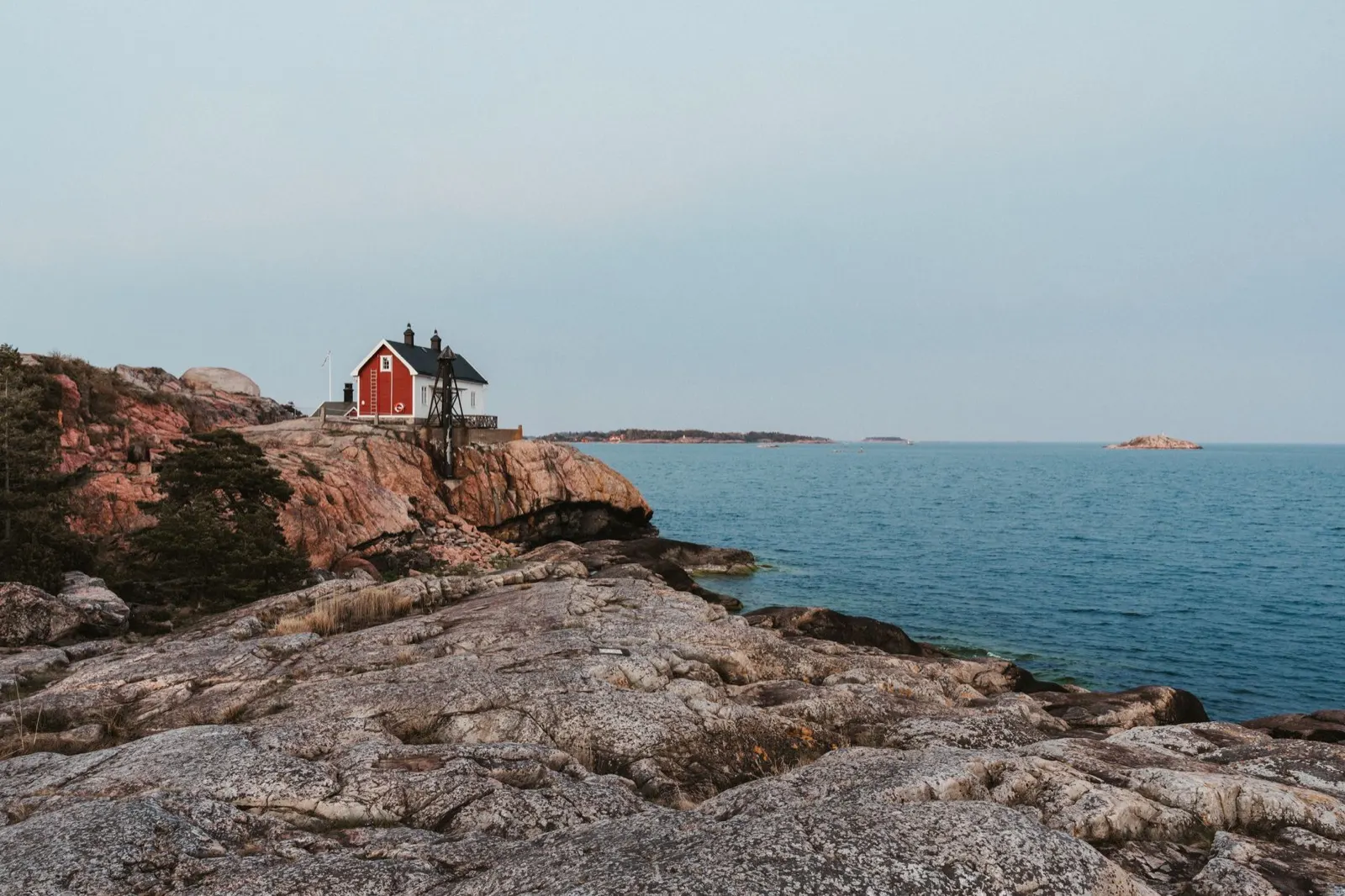
The coast from Gothenburg north to the Norwegian border: smooth glacier-scraped granite, thousands of small islands, and white wooden fishing villages that fill up completely for six weeks. Gothenburg averages a daily maximum of 23 °C in July and 3 °C in January, and it rains in every month of the year.
Best June to August
What it is like
- The rock is the landscape. Bare pink granite, low pines, and water everywhere.
- Seafood is the thing worth spending money on here: prawns, langoustine and oysters straight off a quay.
Where to go
- Smögen and the fish auction
- Fjällbacka and the islands north of it
For the vehicle
- Gothenburg runs a congestion tax that reads foreign plates: 9 to 22 kronor a passage, capped at 60 kronor a day, nothing at weekends or in July.
- Village lanes are narrow and the car parks are small and signed. Park on the edge and walk in.

Skåne
Skåne: the mildest corner of Sweden and the easiest to reach
The southern tip, reached over the Öresund bridge from Copenhagen or by ferry from Germany. Farmland, beech woods, long sand beaches and the gentlest weather in the country: Malmö averages a daily maximum of 23 °C in July and 4 °C in January, with the lowest rainfall of anywhere on this page in April.
Best May to September
What it is like
- Flat to gently rolling, densely farmed, and much more Danish in feel than the rest of Sweden.
- The season is longer here. May and September work in Skåne when they do not in Dalarna.
Where to go
- Österlen, Kivik and Ales stenar
- Söderåsen national park, a rift valley in beech forest
For the vehicle
- Malmö runs a class 1 environmental zone for heavy lorries and buses. It does not affect an ordinary campervan.
- This is farmed country, so almost everything off the road is cultivated land and outside allemansrätten entirely.

Stockholm and the archipelago
Stockholm and the archipelago: a capital on water and 30,000 islands behind it
The capital sits where a lake meets the Baltic, and behind it stretches an archipelago of some 30,000 islands. Stockholm averages a daily maximum of 23 °C in July and 1 °C in January, and it is drier than the west coast: Bromma records 28 mm in March against Gothenburg's 59 mm.
Best June to August
What it is like
- The city is compact, on water, and best seen with the van left outside and a travel card in your pocket.
- The archipelago is reached by passenger boat from the city or by road out to the mainland piers. Most islands take no cars at all.
Where to go
- Gamla stan and Djurgården in the city
- Vaxholm, the archipelago's gateway town
For the vehicle
- The congestion tax is the highest in the country: 11 to 45 kronor a passage in high season, capped at 135 kronor a day, and it bills foreign plates automatically.
- Zones on top of that. Class 1 covers most of the inner city for heavy vehicles, class 2 applies on Hornsgatan, and a class 3 zone has been announced for the area inside Kungsgatan, Birger Jarlsgatan, Hamngatan and Sveavägen.