
Belgium by campervan: best regions and routes
Where to go by campervan in Belgium: recommended regions, the best season, road access and practical route advice. What to know before you go.
Published 18 September 2026Last checked 19 September 2026
Currency
Euro
EUR. Cards everywhere. Bancontact is the local scheme
Language
Dutch, French, German
Dutch in Flanders, French in Wallonia, both in Brussels
Driving
Right
Motorway 120 km/h, 90 km/h over 3.5 tonnes
Power
230V, type E
The socket has an earth pin. Check your hookup lead
Tap water
Safe to drink
Ask for kraantjeswater or eau du robinet
Emergency
112
Police 101. Doctor on call 1733
Areas of Belgium
The regions of Belgium: coast, art cities, capital, river and forest
A country you can cross in two hours still changes completely along the way, from a wall of beach apartments to an empty forest plateau with snow on it. Pick the region by the month and by which set of rules you are entering, because in Belgium those are two different questions and both have real answers.

The Flemish coast
The Flemish coast: one long beach, one tram, and the strictest parking in Belgium
Belgium's entire coastline is a single strip of sand running from De Panne at the French border to Knokke-Heist at the Dutch one, with a tram that runs the whole length of it. Ostend, Blankenberge, Nieuwpoort and De Haan sit along it, and the real dunes survive at the two ends, in the Westhoek and at the Zwin.
Best May, June and September
What it is like
- August is the warmest month at Ostend, with a mean daily maximum of 22 °C, and also one of the wettest at 84 mm.
- Much of the seafront is a wall of apartment blocks. The dunes at De Panne and Knokke are what the rest of it used to look like.
Where to go
- The Westhoek dunes at De Panne, the biggest dune area in the country
- The Zwin nature park at Knokke, for birds and salt marsh
For the vehicle
- Coastal communes are the strictest in Belgium on overnight parking, and each writes its own police regulation. Read the one for the town you stop in.
- Seafront car parks almost all carry height barriers, and the ones that do not fill by 10:00 in summer.

Flanders and the art cities
Flanders and the art cities: Bruges, Ghent, Antwerp and Leuven within an hour of each other
Flat, dense, Dutch speaking and heavily cycled. Four cities that would each be a trip on their own sit within an hour of one another: Bruges and its canals, Ghent and its castle, Antwerp and its port and diamonds, Leuven and its university. Between them is farmland, beer and the battlefields of the Westhoek.
Best May to September
What it is like
- July and August average a daily maximum of 24 °C at Antwerp, which is as warm as Belgium gets outside a heatwave.
- The cities are built to be walked and cycled. Bruges in particular is hostile to anything larger than a car, by design.
Where to go
- Bruges, best very early or after the day trippers leave
- Ghent, the one the Flemish rate above Bruges
For the vehicle
- Antwerp and Ghent both run low emission zones, and a foreign plate has to be registered first. One free registration covers both.
- Ghent says a motorhome may park on the road but not be slept in, and points you at the Blaarmeersen campsite or the Driebeek camper terrain at 12 euros a day.

Brussels and Brabant
Brussels and Brabant: the capital, and the zone you have to register for
Nineteen communes making up a bilingual city region, ringed by Flemish Brabant to the north and Walloon Brabant to the south. Around the edges: the Sonian Forest, a UNESCO-listed beech wood that starts at the tram terminus, the battlefield at Waterloo, and Leuven with the oldest university in the Low Countries.
Best May to September
What it is like
- Uccle, the reference station for the country, averages a daily maximum of 23 °C in July and August and 6 °C in January.
- The Sonian Forest is the reason Brussels feels less landlocked than it is. It is large and it starts inside the region.
Where to go
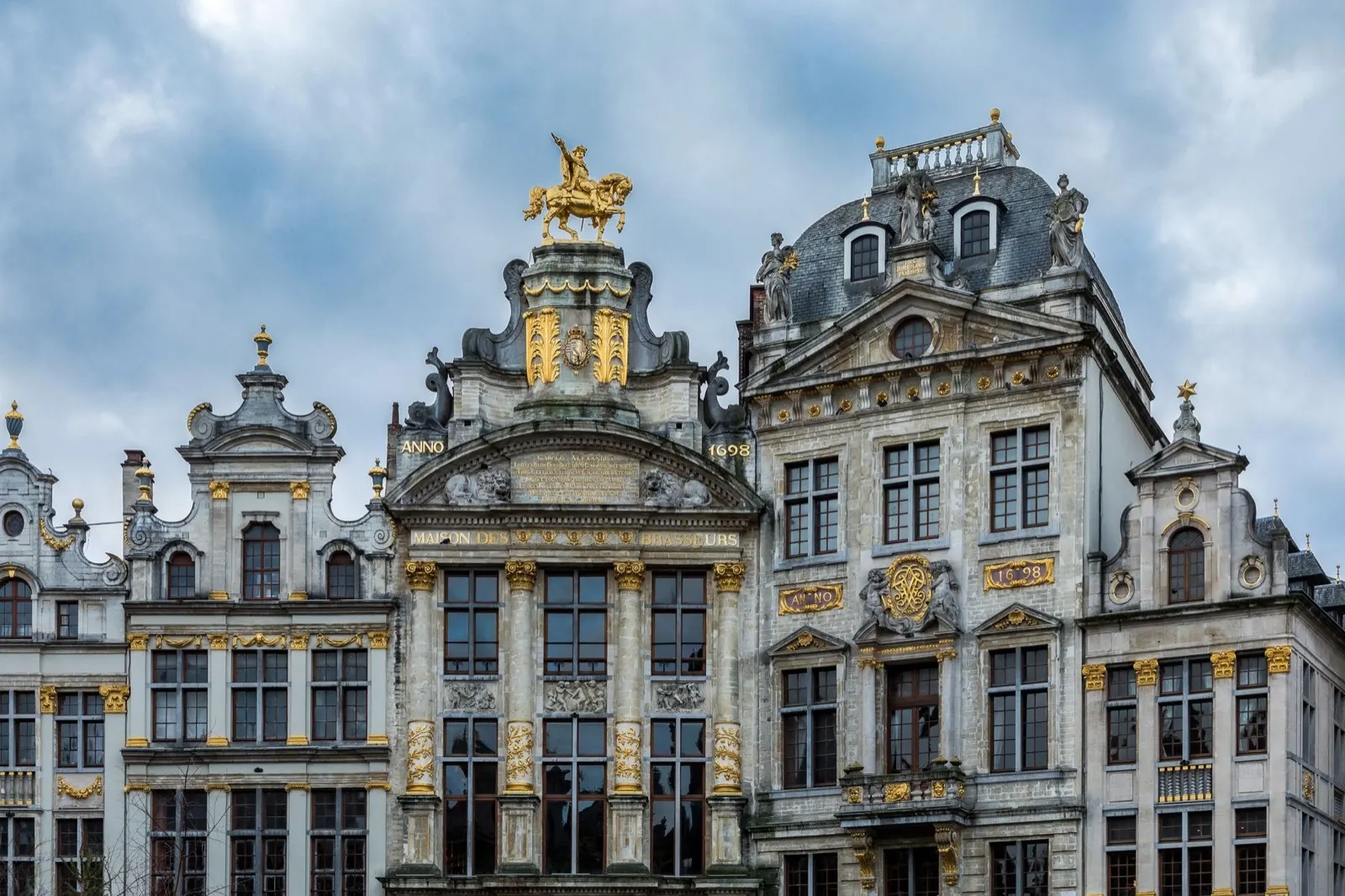
- The Grand Place, best at first light before the square fills
- The Sonian Forest, beech cathedral on the southern edge
For the vehicle
- The low emission zone covers all 19 communes, and a foreign plate must be registered, free, before you enter or within five days. Not doing it is 150 euros.
- Euro 5 diesel lost access on 1 January 2026. A day pass is 35 euros for a car or van, up to 24 a year.