
Latvia by campervan: best regions and routes
Where to go by campervan in Latvia: recommended regions, the best season, road access and practical route advice. What to know before you go.
Published 18 September 2026Last checked 19 September 2026
Currency
Euro
EUR. Cards nearly everywhere, cash in villages and markets
Language
Latvian
Russian widely spoken, English in Riga and among the young
Driving
Right
90 km/h out of town, 50 in town, 80 on gravel
Power
230V, type F
The same round two-pin plug as most of the continent
Tap water
Safe to drink
Ask for krāna ūdens
Emergency
112
One number for police, fire and ambulance
Areas of Latvia
The regions of Latvia: Riga, the Gauja, Kurzeme and Latgale
Latvia is a third the size of England and a quarter of the population lives in one city, so the rest of it is emptier than the map suggests. Riga and the Gulf coast hold the people, the art nouveau and the one place you have to pay to drive into. The Gauja valley inland is the green, sandstone, castle-and-canoe country. Kurzeme in the west is forest, a long wild coast and the cape where two seas meet. Latgale in the east is lakes, a different dialect and the most continental weather in the country. Pick by the month, and by how much gravel you are willing to drive.

Riga and the Gulf coast
Riga and the Gulf coast: the capital, the market and the Jurmala barrier
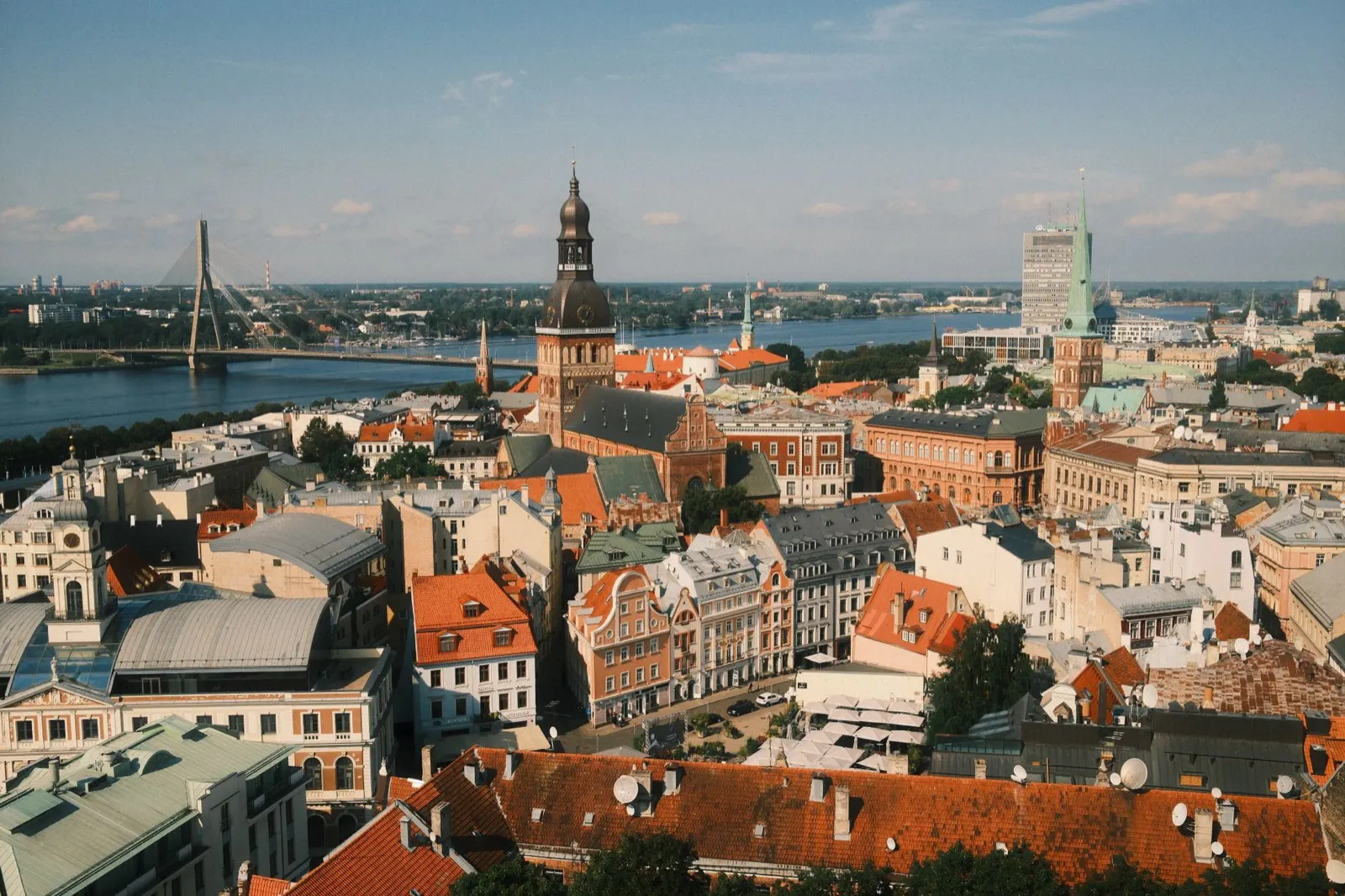
The capital and the curve of coast either side of it, from Jurmala west to Tukums and east towards Saulkrasti. A third of the country lives here. It is the densest art nouveau quarter in Europe, the biggest market in the Baltics, and the one part of Latvia where a big vehicle has to think about traffic. It is also where the country's only entry charge sits, at Jurmala.
Best May to September
What it is like
- Riga averages 24 °C in July and 0 °C in January, with July the wettest month at 80 mm.
- A compact old town, a boulevard ring of art nouveau, and a covered market in five zeppelin hangars.
Where to go
- Riga old town and the art nouveau district on Alberta iela
- Riga Central Market, in the morning
For the vehicle
- Jurmala charges for entry all year, 5 euros a day as of 1 January 2026. Buy the pass online before the barrier.
- The whole coast here is inside the dune protection belt, so no driving, stopping or standing off roads, and no caravans outside planned places.

Gauja and Vidzeme
Gauja and Vidzeme: sandstone cliffs, castles and the best inland walking
The Gauja valley north-east of Riga and the uplands behind it. Latvia's oldest national park follows the river through red sandstone cliffs and caves, past the castles at Sigulda, Turaida and Cesis, and it is the closest thing the country has to a mountain landscape without having any mountains. This is also the coldest inland corner, and in autumn it is the best colour in Latvia.
Best May to September, and late September for colour
What it is like
- Zoseni in the uplands averages 23 °C in July and minus 2 °C in January, colder than anywhere on the coast.
- June and July are the wettest months here, both around 80 mm, and that is thunderstorm rain.
Where to go
- Sigulda, Turaida castle and the cable car across the valley
- Gutmanis cave, the largest in the Baltics
For the vehicle
- Gauja is a national park, so the municipality and the park can restrict forest access under the Forest Act, and a restriction binds once it is signposted.
- Campsites are denser here than anywhere except the coast, and many take a van on grass.

Kurzeme and the west coast
Kurzeme and the west coast: forest, wild beaches and the cape at Kolka
The whole western third of the country, from Liepaja north through Ventspils to Cape Kolka, where the Gulf of Riga meets the open Baltic and the waves arrive from two directions at once. Behind the coast is forest, a scatter of small towns, the old Livonian fishing villages and some of the emptiest driving in the Baltics. The winters here are the mildest in Latvia and the autumns the wettest.
Best June to September
What it is like
- Liepaja averages 22 °C in July and 1 °C in January, the mildest winter in the country.
- October is the wettest month at 84 mm, and the autumn wet arrives early on this coast.
Where to go
- Cape Kolka, where two seas meet
- Slitere national park and the old coastal cliff
For the vehicle
- The dune protection belt runs the length of this coast and bans driving, stopping and standing off roads on all of it. Park where the municipality has provided a car park.
- The municipality must provide beach access on foot: at least two paths per kilometre in towns and villages, and paths no more than a kilometre apart outside them.