
Lithuania by campervan: best regions and routes
Where to go by campervan in Lithuania: recommended regions, the best season, road access and practical route advice. What to know before you go.
Published 18 September 2026Last checked 19 September 2026
Currency
Euro
EUR. Since 2015. Cards nearly everywhere, cash in markets
Language
Lithuanian
Russian and Polish widely spoken, English among the young
Driving
Right
90 km/h out of town, 50 in town, 130 on a motorway in summer
Power
230V, type F
The same round two-pin plug as most of the continent
Tap water
Safe to drink
Ask for vandens iš čiaupo
Emergency
112
One number for police, fire and ambulance
Areas of Lithuania
The regions of Lithuania: Vilnius, the Curonian Spit, Zemaitija and the lakes
Lithuania is the largest and warmest of the three Baltic states and it is arranged around four quite different places. Vilnius and the forested south-east hold the capital, the baroque and the emptiest country in the south. The coast is short, only about 90 kilometres of it, and most of that is the Curonian Spit, which is a UNESCO site with its own entry fee and its own rules. Zemaitija in the west is the old Samogitian heartland, wetter than anywhere else and proud of the difference. Aukstaitija in the north-east is lake country and the oldest national park in the country. Pick by the month, and book the Spit ahead in summer.

Vilnius and the south-east
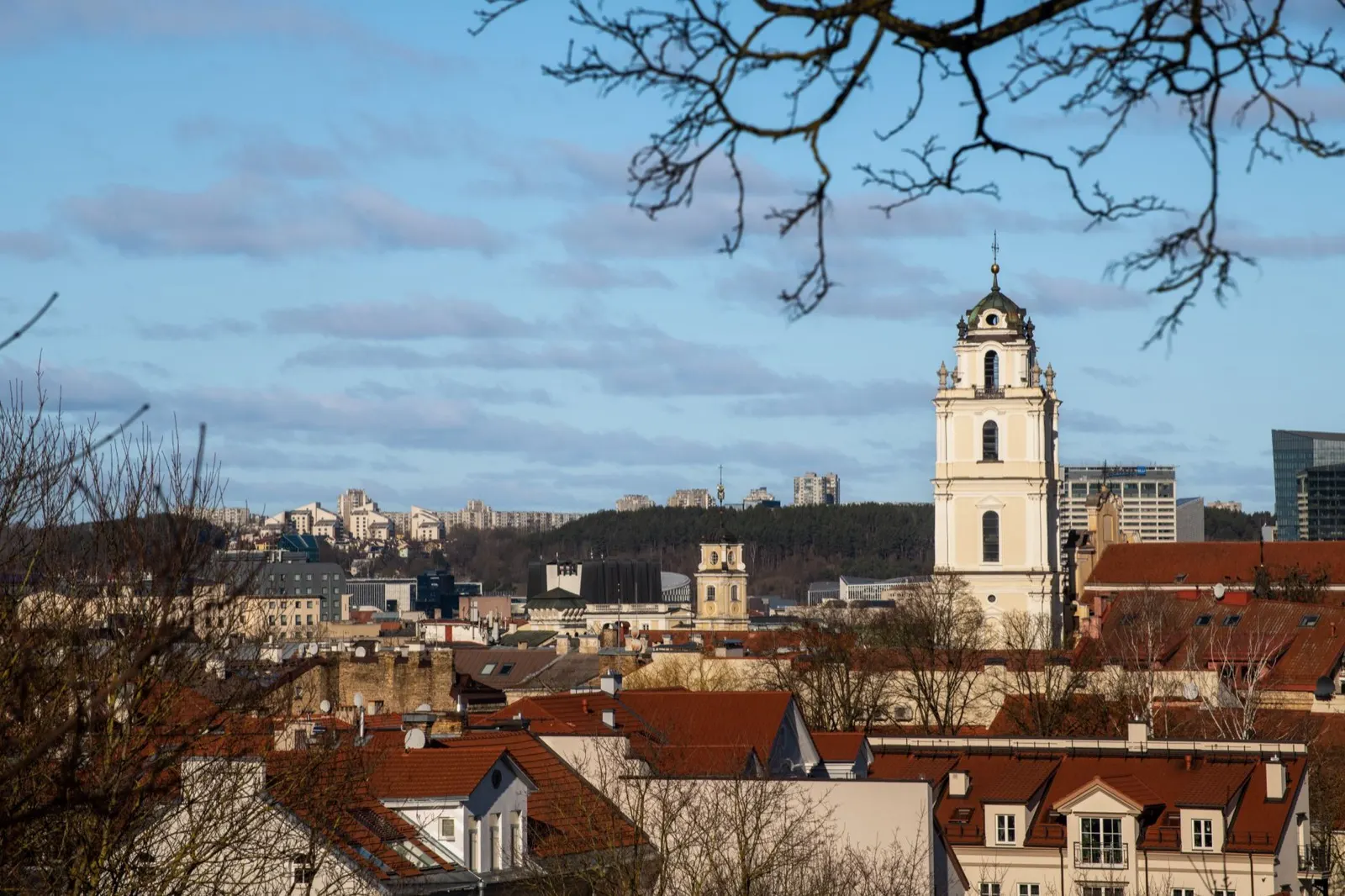
Vilnius and the south-east: baroque, forest and the emptiest driving
The capital and the country south and east of it, out to the Belarusian border. Vilnius has the largest baroque old town in eastern Europe and is small enough to park outside and walk. Around it are Trakai and its island castle, the Dzukija forests, which are the largest continuous woodland in the country, and some of the quietest roads in the European Union.
Best June to August
What it is like
- Vilnius averages 24 °C in July and minus 2 °C in January, the warmest summers in the Baltics.
- July is the wettest month at 92 mm and it arrives as thunderstorms rather than drizzle.
Where to go
- Vilnius old town and Gediminas hill
- Trakai island castle on Lake Galve
For the vehicle
- Park outside the Vilnius old town and walk or take a bus. The streets are narrow and the centre is paid and enforced.
- The Code of Administrative Offences, in a rule added in late 2025, penalises breaching a municipal low emission zone at 40 to 80 euros. Check locally before driving into a city centre.

The Curonian Spit and Klaipėda
The Curonian Spit and Klaipeda: a UNESCO sandbar with its own rules and its own fee
A 98 kilometre sandbar between the Baltic and the Curonian Lagoon, half Lithuanian and half Russian, listed by UNESCO in 2000 and held in place by two centuries of deliberate planting. The Lithuanian half is Neringa, reached by ferry from Klaipeda to Smiltyne and then one road south through Juodkrante and Preila to Nida. It is where most visitors to Lithuania are heading, and it is the most regulated ground in the country.
Best June to September
What it is like
- Klaipeda averages 23 °C in August and 1 °C in January, the mildest winter in the country.
- October is the wettest month at 95 mm, and the coast is wetter in autumn than anywhere inland.
Where to go
- Nida and the Parnidis dune
- Juodkrante and the Hill of Witches
For the vehicle
- You pay to drive in. 20 euros for a motorhome from 21 August to 19 June, 50 euros from 20 June to 20 August, per entry. Buy it online before the ferry.
- Beaches and dunes are closed to vehicles, under the Special Land Use Conditions Act. The whole Spit is coastal strip.

Žemaitija and the west
Zemaitija and the west: lakes, a Soviet missile base and the wettest weather
The old Samogitian heartland inland of the coast, around Telsiai, Plateliai and Plunge. It is hillier and wetter than the rest of the country, it has its own dialect and a strong sense of itself, and it holds Zemaitija national park with Lake Plateliai at its centre. Under the park, at Plokstine, is a decommissioned Soviet underground missile base that is now a museum, which is an unusual thing to find in a national park.
Best June to September
What it is like
- Telsiai averages 23 °C in July and minus 1 °C in January, and it is the wettest region in the country.
- October averages 88 mm and January 69 mm, so the autumn and winter here are grey.
Where to go
- Lake Plateliai and Zemaitija national park
- The Plokstine Cold War missile base museum
For the vehicle
- National park rules can restrict vehicles, under the Protected Areas Act, and breaching a park regime costs 30 to 90 euros.
- Camping only at equipped sites, as everywhere in Lithuania. The park directorate runs several around Plateliai.