
Slovenia by campervan: best regions and routes
Where to go by campervan in Slovenia: recommended regions, the best season, road access and practical route advice. What to know before you go.
Published 18 September 2026Last checked 18 September 2026
Currency
Euro
EUR. In the eurozone since 2007. Cards almost everywhere
Language
Slovene
Italian and Hungarian are co-official in border towns
Driving
Right
Motorway 130 km/h, 80 km/h over 3,500 kg
Power
230V, type F
Same two-pin plug as most of Europe
Tap water
Safe to drink
Ask for vodo iz pipe
Emergency
112
Any language. Police 113, traffic info 1970
Areas of Slovenia
The regions of Slovenia: the Alps, the Karst and the coast, all within two hours
Slovenia is 20,272 square kilometres, and that is the single most useful thing to know about planning a trip here. From Ljubljana the Julian Alps, the Adriatic and the Hungarian border are each under two hours away, so you pick your region by the weather that week rather than by the route you planned at home.

Julian Alps and Triglav
The Julian Alps and Triglav: the best scenery and the strictest rules
Bled, Bohinj, Kranjska Gora, the Vrata valley and the whole of Triglav National Park, which covers about 880 square kilometres and roughly four percent of the country. This is why most people come, and it is also the one part of Slovenia where a national statute tells you where you may not park a campervan overnight.
Best June to September
What it is like
- Rateče, on a valley floor at 864 metres, averages 24 °C in July and 2 °C in January. The passes above it are colder and hold snow for months longer.
- Bled and Bohinj are busy from June to September and calm either side. Bohinj is the wilder of the two and the better base.
Where to go
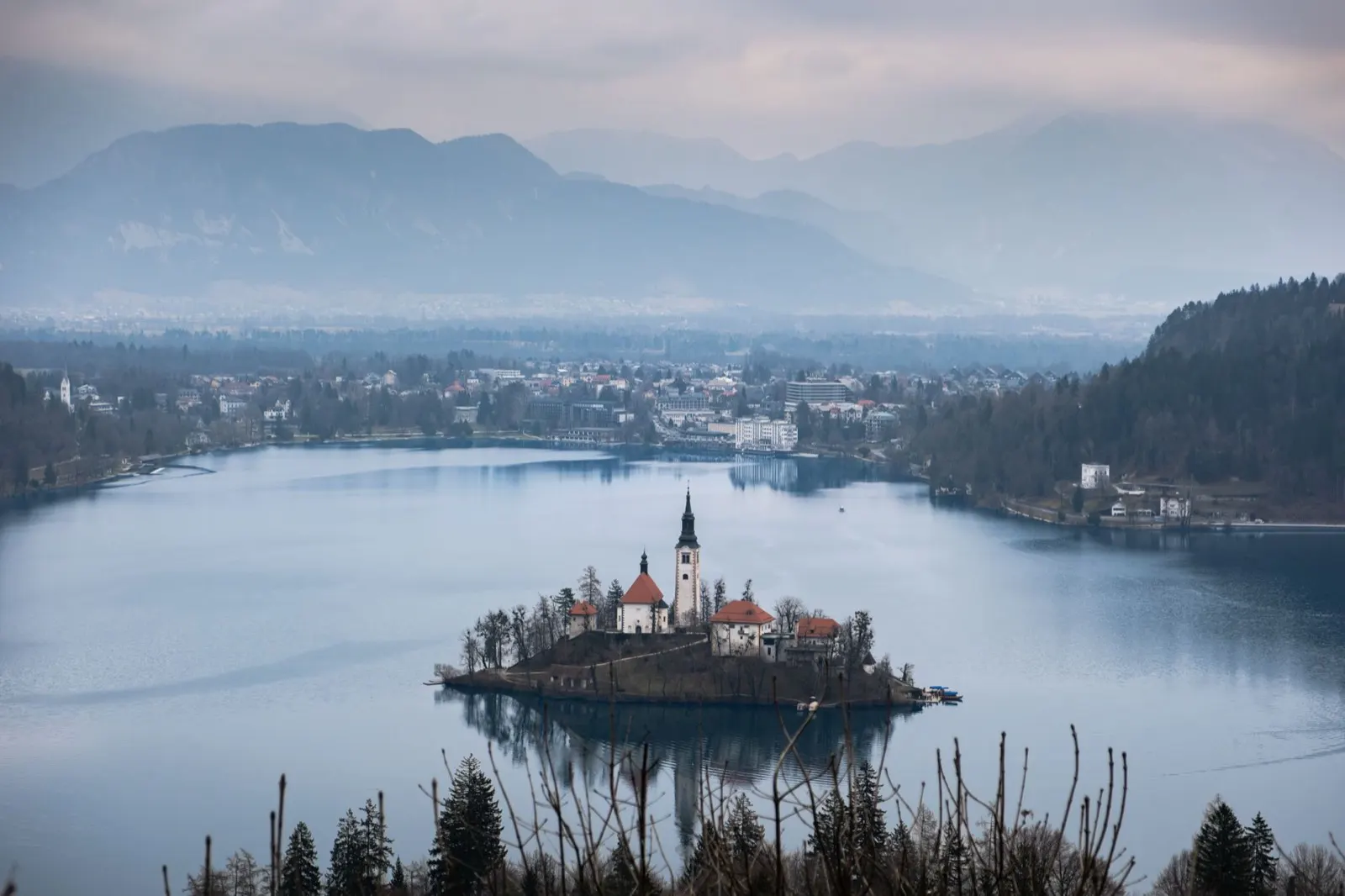
- Lake Bled and the Vintgar gorge
- Lake Bohinj and the Savica waterfall
For the vehicle
- Inside the park, parking a habitation vehicle outside a designated place carries 100 to 1,000 euros, and driving or parking off the road network carries 500 to 3,000.
- Bohinj's destination authority names two campsites, at Ukanc and Bohinjska Bistrica, and two motorhome parking areas, at Senožeta in Srednja vas and the Bohinjska Bistrica station.

The Soča valley
The Soča valley: turquoise water, a war museum and the best road in the country
Bovec, Kobarid and Tolmin along the Soča, then down to Nova Gorica and the vineyards of the Brda. The river is the colour the photographs suggest, and the valley was the Isonzo front in the First World War, which is why there is a museum in Kobarid worth an afternoon.
Best May to September
What it is like
- Whitewater, gorges and via ferrata in the upper valley, wine and warmth in the lower one.
- Nova Gorica at the bottom of the valley averages 29 °C in July and 30 in August, and 199 mm of rain in November. The upper valley is cooler and wetter still.
Where to go
- Tolmin gorges and the Soča trail
- Kobarid and the Kozjak waterfall
For the vehicle
- Bovec is reported to cap parking a habitation vehicle at 12 hours outside a campsite or the town's own motorhome stopover, so plan the night rather than improvise it.
- The upper valley is one of the three summer pressure points in the country, along with Gorenjska and the coast. Campsites fill in August.

The coast and the Karst
The coast and the Karst: 46 kilometres of Adriatic and the caves behind it
Piran, Portorož, Izola, Koper and Ankaran along the whole 46.6 kilometres of Slovenian coast, then inland into the limestone: Škocjan, Postojna, Lipica and the Vipava valley. Venetian architecture, Italian co-official, and a winter that is mild enough to travel in.
Best April to June, September and October
What it is like
- Portorož averages 29 °C in July and August and 9 °C in January, so the coast has no dead season, only a quiet one.
- Piran is a Venetian town on a peninsula, walkable in an hour and closed to through traffic. Izola and Koper are working towns with fewer visitors.
Where to go
- Piran and the Sečovlje salt pans
- Škocjan caves, a Unesco site and the better cave
For the vehicle
- The coast is the third of the country's summer pressure points. Campsites cluster around Lucija, Izola and Ankaran and fill in August.
- The burja wind is a real constraint for a high-sided vehicle. Warning signs on the Razdrto to Vipava road and the coastal motorway are not decorative.