
Estonia by campervan: best regions and routes
Where to go by campervan in Estonia: recommended regions, the best season, road access and practical route advice. What to know before you go.
Published 18 September 2026Last checked 19 September 2026
Currency
Euro
EUR. Cards for everything, including a coffee
Language
Estonian
English widely spoken, Russian in the north-east
Driving
Right
90 km/h out of town, 50 km/h in town, no mass bands
Power
230V, type F
The same round two-pin plug as most of the continent
Tap water
Safe to drink
Ask for kraanivesi
Emergency
112
One number for police, fire and ambulance
Areas of Estonia
The regions of Estonia: Tallinn, Lahemaa, the islands and the south
Estonia is small enough to cross in a long day and varied enough that you should not. The north coast has the capital, the limestone cliffs and the manor houses. The western islands are a different pace and a milder climate, reached by a short ferry or, in a hard winter, across the ice. The south is hills, lakes and the country's second city, and it is the warmest part in summer and the coldest in winter. Pick by the month and by how much ferry timetable you are willing to build a week around.

Tallinn and the north coast
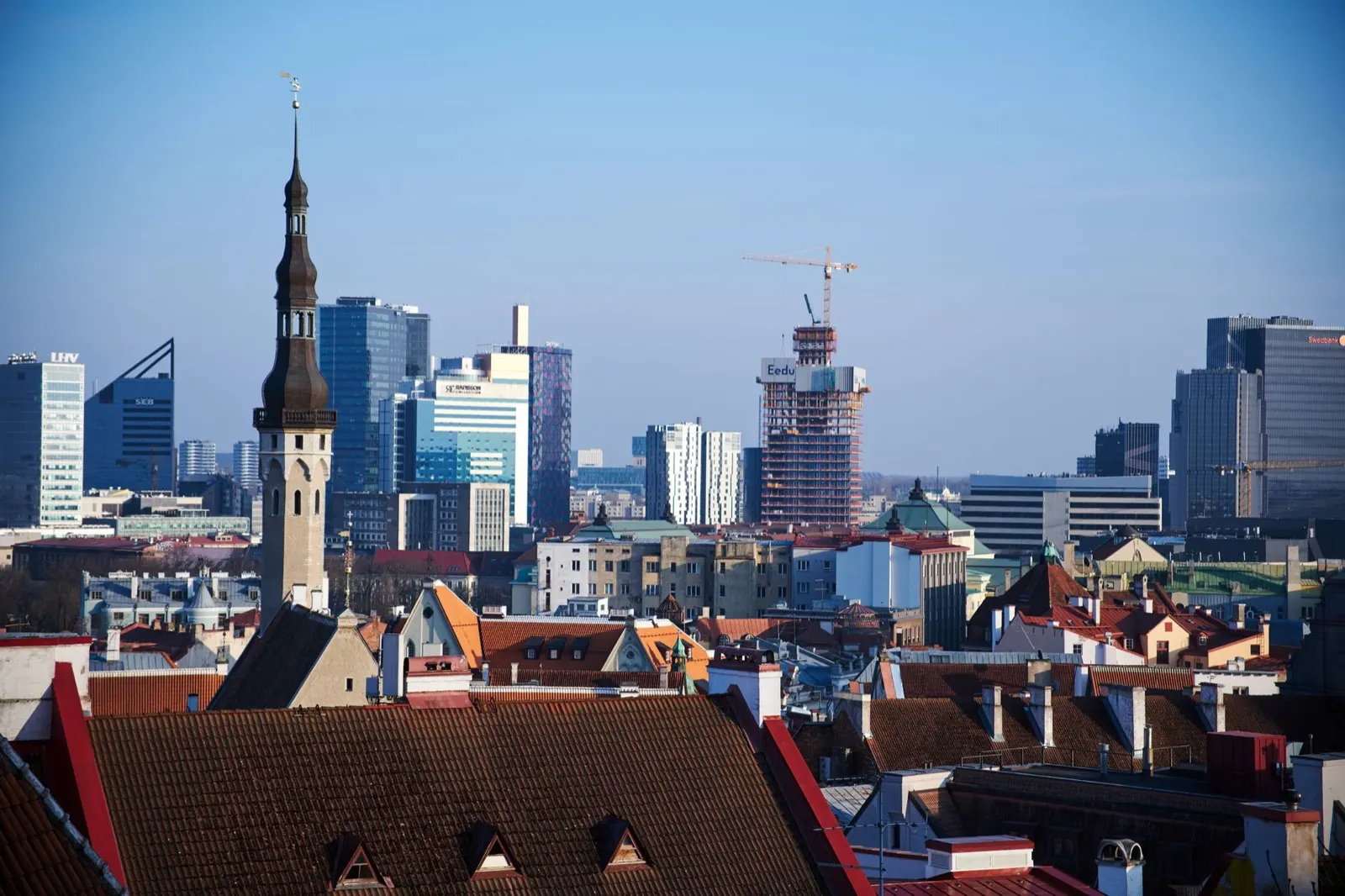
Tallinn and the north coast: the way in, and the only real city driving
The capital and the limestone coast either side of it, from Paldiski east towards Narva. Almost every campervan arriving from Finland lands here on the Helsinki ferry, and almost every one arriving from Latvia passes through. It is the only part of Estonia where a big vehicle has to think about traffic at all, and it is also where the free wifi, the good food and the late opening hours are.
Best June to August
What it is like
- Tallinn-Harku averages 22 °C in July and minus 1 °C in January, with August the wettest month at 85 mm.
- A medieval old town, small enough to walk, ringed by a modern city that runs on the internet.
Where to go
- Tallinn old town, parked outside and reached on foot
- Paldiski and the Pakri cliffs west of the city
For the vehicle
- No tolls and no low emission zone, even in Tallinn. City centre parking is paid and enforced.
- This is a built-up area in the legal sense for long stretches, so the darkness rule in the Traffic Act does not bite, but the ordinary parking rules do.

Lahemaa
Lahemaa: bogs, manor houses and the best of the RMK network
Estonia's oldest and largest national park, an hour east of Tallinn on the north coast. Four peninsulas, a great deal of bog, erratic boulders left by the ice, fishing villages and a set of restored manor houses. It is also the best single place to understand what the RMK network is, because the park is full of campfire sites, huts and marked trails and all of them are free.
Best May to September
What it is like
- Kunda on this coast averages 22 °C in July and minus 1 °C in January, and it is the driest of the four regions here at 27 mm in March.
- Bog boardwalks, pine forest, boulder fields and a low rocky shore. Flat, quiet and easy walking.
Where to go
- Viru bog boardwalk, the classic short walk
- Palmse manor and the park around it
For the vehicle
- RMK sites are dense here, and each one prints its own vehicle capacity. Read the site page before you drive down a forest track.
- Protected area rules apply: roads and paths in the limited-management and protected zones are open to public use from sunrise to sunset, under the Nature Conservation Act.

The western islands
Saaremaa and Hiiumaa: short ferries, mild winters and a different pace
Saaremaa and Hiiumaa sit off the west coast with Muhu and a scatter of smaller islands between them. Both are reached by a short car ferry, and in a hard winter by an official ice road instead. They are flatter, milder and windier than the mainland, and they run at a slower pace that islanders are entirely aware of. Juniper, limestone, windmills, lighthouses and a meteorite crater.
Best June to September
What it is like
- The mildest winters in the country: Vilsandi averages 1 °C in January against Tartu's minus 2, and only 21 °C in July.
- Driest of the four regions in spring, at 28 mm in April, and windy enough that it matters when you park.
Where to go
- Kuressaare castle, the best preserved in the Baltics
- Kaali meteorite crater on Saaremaa
For the vehicle
- The ferry is cheap and the surcharge is about size: 12 euros to Saaremaa and 14.30 to Hiiumaa for a motorhome, rising only if you are over 2.6 m wide or 4.0 m high.
- Book ahead in July, August and at midsummer. The boats fill and a missed sailing is a long wait.