
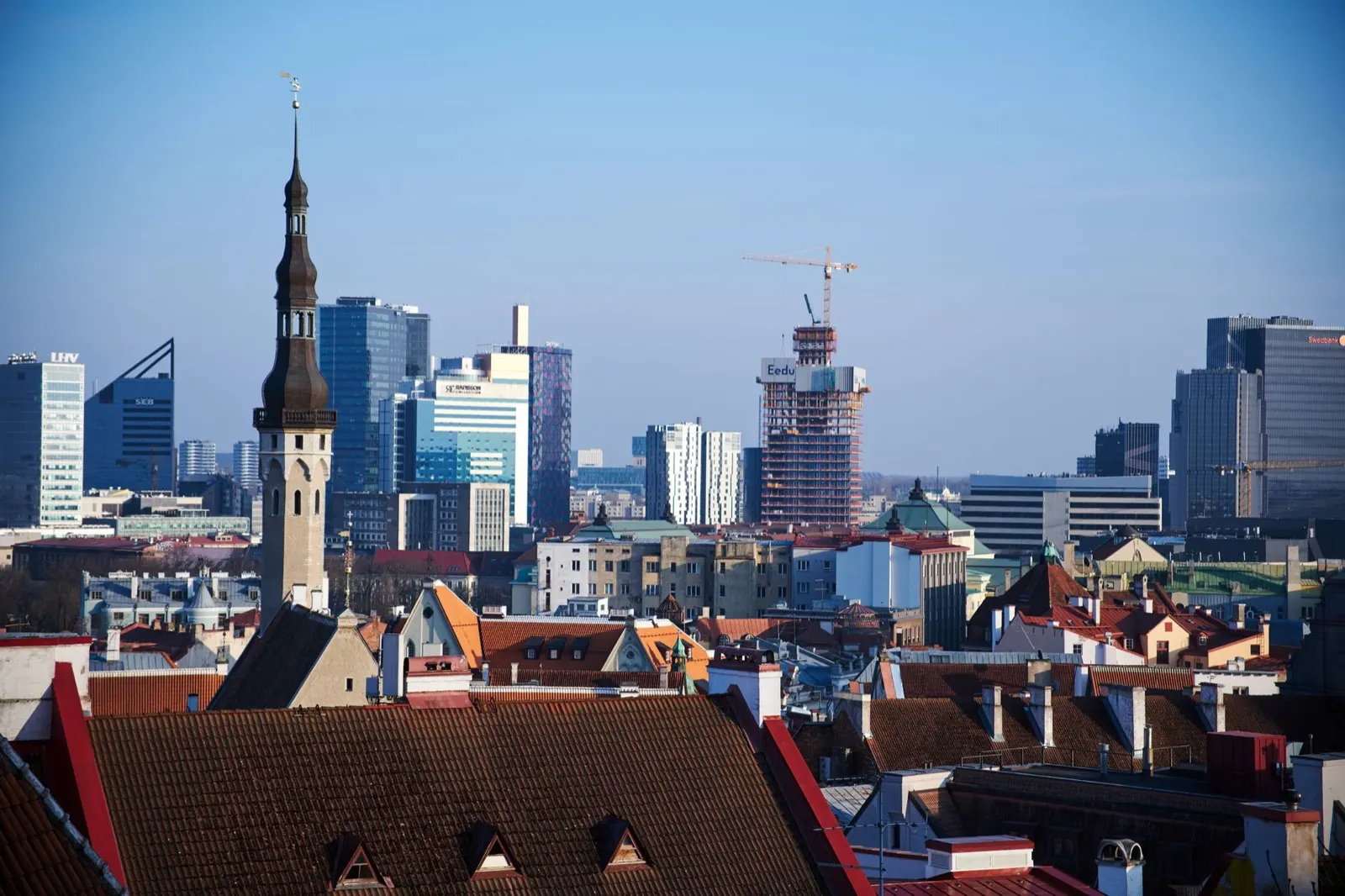
Estonia by campervan: driving, tolls and rules
Driving a campervan in Estonia: speed limits, tolls, low-emission zones, required equipment and key road rules. What to know before you go.
Published 18 September 2026Last checked 19 September 2026
Currency
Euro
EUR. Cards for everything, including a coffee
Language
Estonian
English widely spoken, Russian in the north-east
Driving
Right
90 km/h out of town, 50 km/h in town, no mass bands
Power
230V, type F
The same round two-pin plug as most of the continent
Tap water
Safe to drink
Ask for kraanivesi
Emergency
112
One number for police, fire and ambulance
Driving
Driving
There are no tolls in Estonia for anything up to 3,500 kg. No vignette, no booth, no gantry, no city charge. The road user charge in the Traffic Act is payable for a veoauto, a lorry, with a gross mass over 3,500 kg, and the Act defines a veoauto as a vehicle built to carry goods, tow or do special work. A motorhome is not one.

Speed limits under Liiklusseadus, the Traffic Act
| Where | Limit | Notes |
|---|---|---|
| Outside a built-up area | 90 km/h | The same for a car and for a motorhome over 3.5 t. The Transport Administration may raise it to 120 on a marked stretch |
| Inside a built-up area | 50 km/h | A local authority may raise it to 90 on a marked road |
| Residential zone, õueala | 20 km/h | Signed at the entrance |
| Ice road, ice up to 50 cm | 10 to 25 or 40 to 70 km/h | The 25 to 40 band is forbidden, not merely discouraged |
| Ice road, ice over 50 cm | 70 km/h maximum | Still daylight only |
Ferries to Saaremaa and Hiiumaa
- Two mainland routes. Virtsu to Kuivastu for Muhu and Saaremaa, and Rohuküla to Heltermaa for Hiiumaa. Both are short, frequent and sold at praamid.ee.
- A motorhome pays the car fare: 12 euros on the Saaremaa line and 14.30 on the Hiiumaa line, plus 4.30 or 4.85 for every adult on board.
Ice roads, and the rules that sound strange
- Seven official ice roads are commissioned and supervised by the Transport Administration: Heltermaa to Rohuküla, Kuivastu to Virtsu, Sõru to Triigi, Rohuküla to Sviby, Lao to Kihnu, Haapsalu to Noarootsi and Laaksaare to Piirissaare.
- Do not drive at 25 to 40 km/h. The recommended speeds are up to 25 or between 40 and 70, because a vehicle in the forbidden band sets up a wave under the ice.
The drink drive limit is one of the strictest in Europe. The Traffic Act sets it at 0.20 milligrams of alcohol per gram of blood, or 0.10 per litre of breath, which is roughly 0.2 per mille. Between 0.20 and 0.49 the fine is up to 100 fine units, 800 euros, or loss of licence for up to six months. From 0.50 to 1.49 it is up to 300 fine units, 2,400 euros, detention, or loss of licence for up to twelve months. In practice this means nothing at all before driving.
Parking and stopping
- Outside a built-up area in darkness, a vehicle may be parked only in a car park or a rest area, under the Traffic Act. This is the single most important parking rule in the country for a van.
- Outside a built-up area and away from a car park, the Act requires you to stop on the right shoulder, in one row, parallel to the edge.
Winter, fuel and animals
- Diesel was 2.07 euros a litre in the week to 14 September 2026 and petrol 95 was 1.91, on the Commission's Weekly Oil Bulletin figures.
- Distances between stations are short by Nordic standards, but the islands and the eastern border country are thinner. Fill at half a tank.